Over the past centuries, humanity has witnessed extraordinary transformations through innovations rooted in scientific research—each breakthrough challenging the limits of our imagination and reshaping our understanding of the world. These advancements, collectively referred to as “Deep Tech,” have continually pushed the boundaries of what is possible, fundamentally altering industries, economies, and the human experience itself.
Globally, the most striking examples of Deep Tech innovation have forever changed our trajectory as a species. Consider the Apollo 11 mission in 1969: humanity, for the first time, escaped Earth’s gravitational pull, defying the laws of nature to land a man on the Moon—a feat once deemed impossible, reserved for the realm of science fiction. This singular event unlocked an era of space exploration, not just as a scientific endeavor, but as a foundation for new industries—satellite technology, space tourism, and even plans for interplanetary colonization.
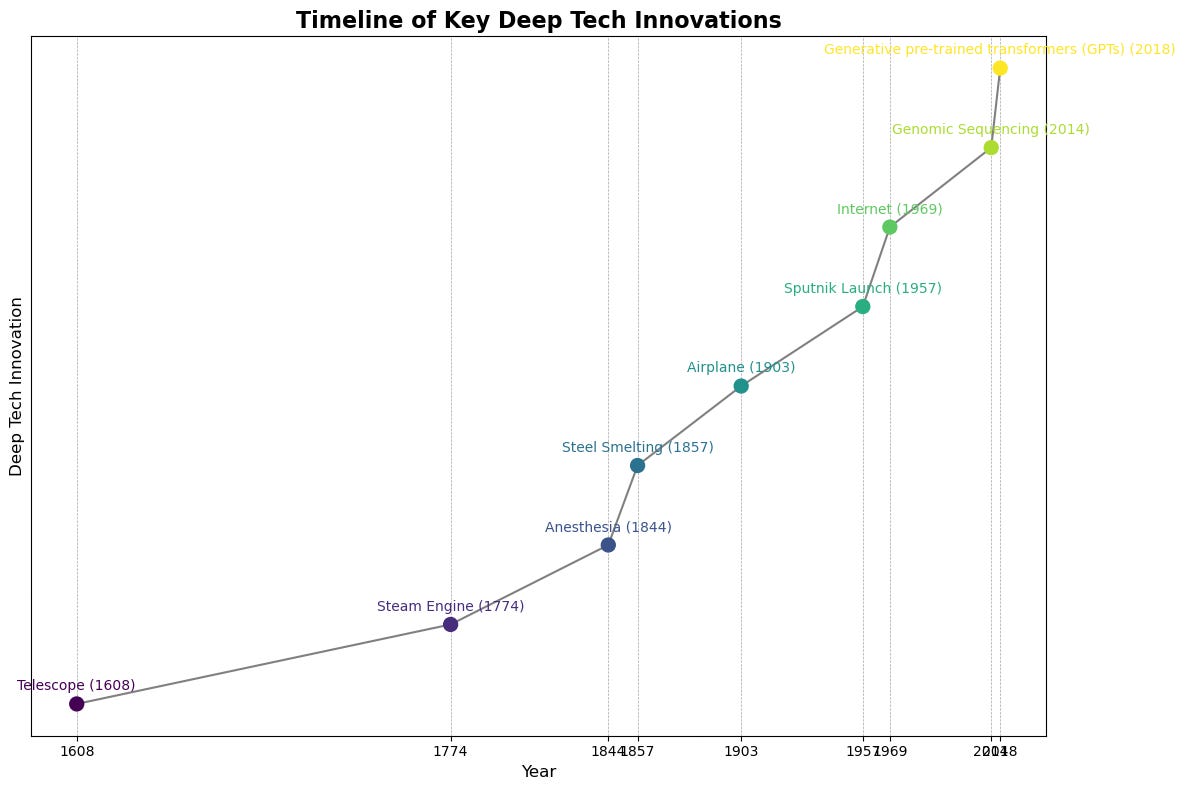
This relentless march of scientific progress is not limited to space exploration. Over the past five centuries, Deep Tech innovations such as the telescope in 1608, the steam engine in 1774, anesthesia in 1844, steel smelting in 1857, the airplane in 1903, the Internet in 1969, and genomic sequencing in 2014 have continuously redefined the world. These breakthroughs have each sparked a ripple effect of technological, societal, and economic changes that were unimaginable at their inception, creating entire industries and addressing some of humanity’s greatest challenges.
In India, this same force of Deep Tech innovation is becoming increasingly crucial. India, with its massive and complex set of challenges—ranging from energy demands to healthcare access and food security—cannot rely solely on traditional technologies or incremental improvements to solve these problems. The need for transformative solutions, driven by scientific breakthroughs, is more pressing than ever. India’s technological journey is now aligning with global Deep Tech trends, where innovations in fields like quantum computing, artificial intelligence, biotechnology, and advanced materials are beginning to reshape industries.
What is Deep Tech?
Deep tech refers to startups grounded in significant scientific breakthroughs and advanced engineering, often driven by rigorous research and development. These companies focus on solving complex, real-world problems through cutting-edge innovation that combines hardware and software. Deep tech spans areas such as robotics and automation, advanced materials, synthetic biology, energy storage, quantum computing, aerospace, and semiconductor design, aiming to reshape industries and create transformative solutions with lasting impact.
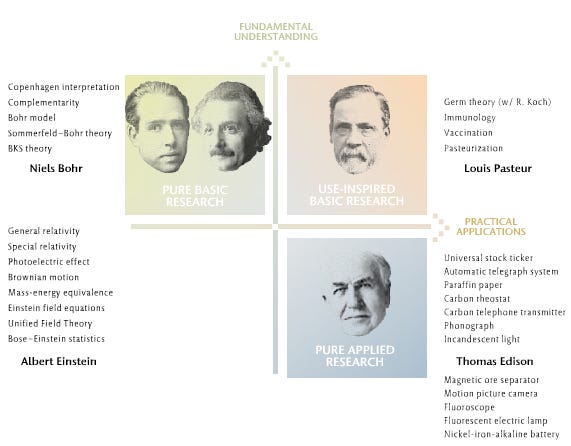
Source: Pasteur’s Quadrant by Donald Stokes
Deep science tech approaches are characterized by a fusion of basic and applied research. The fundamental breakthroughs are guided by applications to solve pressing real-world problems.
The Problem Statement, and Why do we need DeepTech:
Climate Change and Environmental Degradation, Energy Deficiency and Sustainability:
India is the third-largest emitter of greenhouse gases and faces severe consequences of climate change, including rising sea levels, extreme weather events, and declining agricultural productivity. The country’s reliance on coal and other traditional energy sources has hampered its progress toward a sustainable future. India’s energy demand is projected to rise to 1,650 GW by 2030. While renewable energy capacity is expanding, the country still relies heavily on coal, contributing to air pollution and carbon emissions. India must reach 450 GW of renewable energy capacity by 2030, and innovations in energy storage and green technologies are crucial to achieving net-zero emissions by 2070
Deep Tech Impact: Startups like Log9 Materials are developing advanced battery solutions, while Sublime Systems is revolutionizing cement manufacturing, significantly reducing CO2 emissions. IInnovative clean energy technologies, such as those from Adani Green, ReNew are making renewable energy more viable. Additionally, startups like Newtrace are pioneering green hydrogen solutions, offering a sustainable alternative for industries like steel and heavy transportation.
Manufacturing Competitiveness and Automation:
India’s manufacturing sector contributes 15% to GDP but lags behind global competitors in automation and cost efficiency. With Industry 4.0 driving global trends, Indian industries risk being left behind without adopting advanced manufacturing technologies.
Deep Tech Impact: AI-powered robotics from companies like GreyOrange are enhancing productivity in warehousing and assembly lines. Deep Tech-led automation could cut production costs by 30-50%, helping India double its manufacturing output to $1 trillion by 2030.
Semiconductor Demand and Self-Reliance:
India consumes $30 billion worth of semiconductors annually, a figure expected to rise to $80 billion by 2030. However, nearly all of these semiconductors are imported, leaving India vulnerable to supply chain disruptions.
Deep Tech Impact: Domestic players like Sankalp Semiconductor, Vedanta, Tata Group and Taiwan's Powerchip Semiconductor Manufacturing Corporation (PSMC) are spearheading efforts to build a local semiconductor ecosystem. Building this sector could reduce import dependency, create 200,000 jobs, and contribute significantly to India’s GDP.
Healthcare Accessibility and Affordability:
India’s healthcare system struggles with accessibility and affordability, especially in rural areas. With an aging population and rising rates of chronic diseases, the system is stretched thin.
Deep Tech Impact: AI-driven solutions like Niramai and SigTuple are revolutionizing diagnostics, enabling early detection of diseases and reducing costs. These technologies are particularly critical for rural India, where 70% of cancers are detected at advanced stages due to lack of early screening.
Food Security and Sustainable Agriculture:
Agriculture supports over half of India’s population, but the sector is grappling with resource depletion and inefficient farming methods. Feeding a population projected to reach 1.5 billion by 2030 will require sustainable and scalable agricultural practices.
Deep Tech Impact: AI-driven platforms like Fasal and bioscience innovations from Absolute are optimizing farming practices, reducing water and fertilizer usage. Precision agriculture technologies are crucial for combating declining groundwater levels and ensuring food security.
National Security and Technological Dependence:
India’s $80 billion defense budget is among the largest globally, yet over 60% of defense equipment is imported, making the country vulnerable to geopolitical risks.
Deep Tech Impact: Startups like QNu Labs are developing quantum-safe encryption technologies, while Agnikul Cosmos and Skyroot Aerospace are creating indigenous launch vehicles and propulsion systems. Tata Advanced Systems Limited (TASL) is driving innovations in aerospace manufacturing and military engineering through strategic partnershipsThese innovations not only strengthen India’s defense capabilities but also position it as a global space-tech leader.
A Quick primer on Technology Readiness Level (TRL), and why it matters:
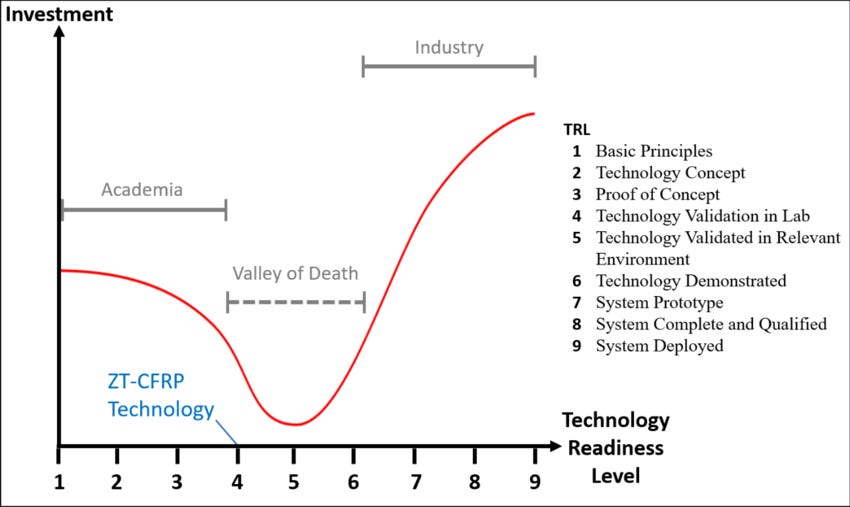
The Technology Readiness Level (TRL) scale was developed by NASA to assess the maturity of a particular technology throughout its development cycle. It is a widely recognized framework that classifies a technology’s progress from early-stage research to full-scale deployment, ensuring that innovations are thoroughly vetted before commercial or operational use. The scale comprises nine levels, ranging from TRL 1 (basic principles observed) to TRL 9 (actual system flight-proven in operational conditions).
TRL 1 - TRL 3: Early stages of research, concept validation, and proof-of-concept. Examples include quantum computing, where companies like IBM explore fundamental principles, or fusion energy startups like Commonwealth Fusion Systems working on early prototypes.
TRL 4 - TRL 6: The “Valley of Death” where technologies face challenges transitioning from lab to real-world applications. QuantumScape’s battery technology or bioprinting innovations by Organovo are being tested at this stage but need substantial investment to scale.
TRL 7 - TRL 9: Technologies become commercially viable, with successful demonstrations. SpaceX’s reusable rockets and Waymo’s autonomous driving systems are examples at this stage, having proven their operational effectiveness
Deep Tech innovations often operate at the lower end of the TRL scale during their early stages. For instance, many emerging technologies in fields like quantum computing, synthetic biology, and advanced materials often start at TRL 1 to TRL 3. They undergo rigorous research and iterative testing before crossing into the later TRL stages, where they become commercially viable. The “Valley of Death” is particularly relevant for Deep Tech, as this is where a significant amount of funding and expertise is required to advance promising technologies to higher readiness levels. Deep Tech startups working on breakthrough technologies often need sustained investment and collaboration with academia and industry to cross this gap.
For instance, advanced materials for renewable energy solutions or AI-driven automation platforms may begin their journey at low TRL levels, where basic principles are observed and early prototypes are created. As these technologies mature and become validated in operational settings, they can move toward TRL 9, where industries can deploy them at scale, enabling transformative impacts on sectors such as healthcare, manufacturing, and aerospace.
Why Does It Matter?
The TRL scale helps assess a technology’s maturity and guides strategic investments, especially for Deep Tech innovations like advanced materials, synthetic biology, and quantum computing. Many innovations face challenges in the “Valley of Death” (TRL 4-6) and require collaboration between investors, academia, and industry to progress. Understanding TRL levels allows investors to de-risk their investments by identifying technologies ready for commercialization, ensuring breakthroughs in areas like healthcare, energy, and aerospace receive the necessary support to scale.
Time-Machine Theory: Why Now is the Moment for Deep Tech
The “Time Machine Theory” can also be contextualized by observing the cycles of innovation that have defined human progress. Historically, periods of difficulty and disorder have sparked transformative breakthroughs that ushered in new eras of growth. Each wave of innovation was a response to rising entropy—chaos, disorder, and inefficiency—and those who spotted the signals early reaped the benefits. Let’s trace the three major waves of innovation and understand how each created the fertile conditions for deep tech to flourish today.
Historical Waves of Innovation and the Cycles of Entropy
Industrial Revolution (mid-1700s – early 1900s): Mechanized production tackled inefficiencies in the agrarian economy, reducing labor shortages and enabling global trade.
Deep tech analogy: Automation and AI transforming manufacturing and logistics.
Tech Revolution (1950s – 1990s): Post-WWII military R&D in computing and electronics sparked the technology revolution.
Deep tech analogy: Quantum computing and semiconductors driven by defense and national security.
Digital Revolution (1990s – Present): Internet and mobile devices initially caused information overload, but simplified access to data created entire industries in e-commerce and cloud computing.
Deep tech analogy: Current challenges like climate change and inequality present opportunities for innovation in AI, biotech, and materials science.
Fourth Wave of Innovation: Deep Tech:
• Biological & Technical Fusion: Synthetic biology and biomanufacturing are transforming healthcare, sustainability, and food production.
• Revolutionizing Computing: Quantum computing, AI, and neuromorphic chips are unlocking solutions in drug discovery, climate modeling, and materials science.
• New Industrial Frontier: Robotics, autonomous systems, and advanced manufacturing will automate complex processes in agriculture, construction, and logistics
Why Now?
Timing plays a critical role in any successful innovation cycle, and we are at a unique inflection point where deep tech innovations are poised to unlock massive opportunities.
Technological Readiness: The maturation of several core technologies—such as quantum computing, AI/ML, and space technologies—has reached a level of readiness where they can be commercialized. Technology Readiness Levels (TRL) have climbed to stages where applications are no longer just theoretical but deployable, paving the way for practical, scalable solutions across sectors. The supporting ecosystem, such as faster prototyping tools, access to advanced manufacturing techniques, and modular design methodologies, have reduced the time and cost barriers that previously slowed down deep tech development.
Convergence of Mega Trends: Global challenges like climate change, supply chain disruptions, and geopolitical tensions are forcing industries to rethink their reliance on traditional technologies. Simultaneously, governments and private investors are pouring resources into innovation-driven solutions, as seen through policy pushes like the India Semiconductor Mission and Quantum Missions globally. These trends are creating fertile ground for deep tech solutions to thrive. The need for breakthroughs in sectors such as energy storage, space, biotech, and advanced materials has never been more urgent.
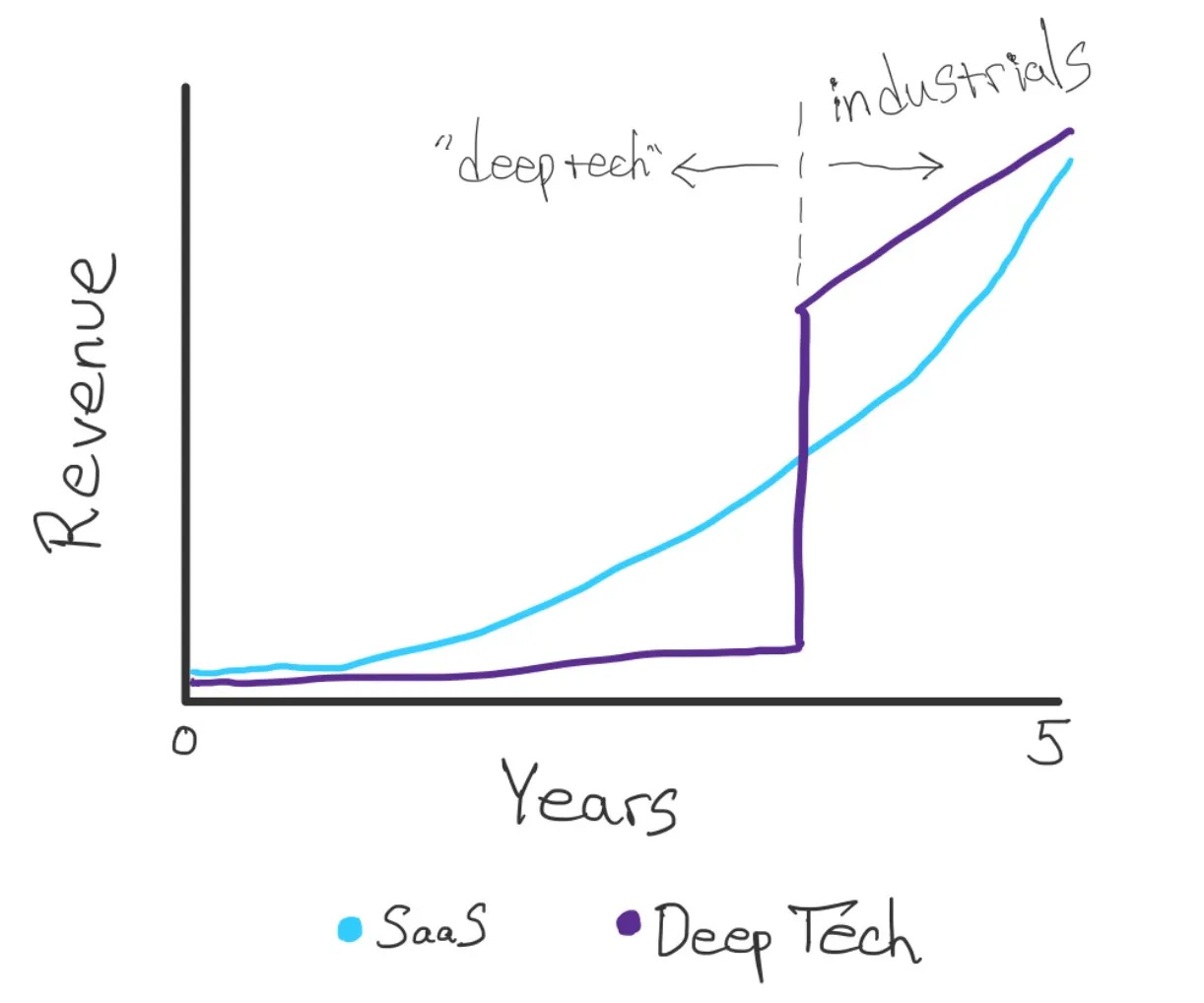
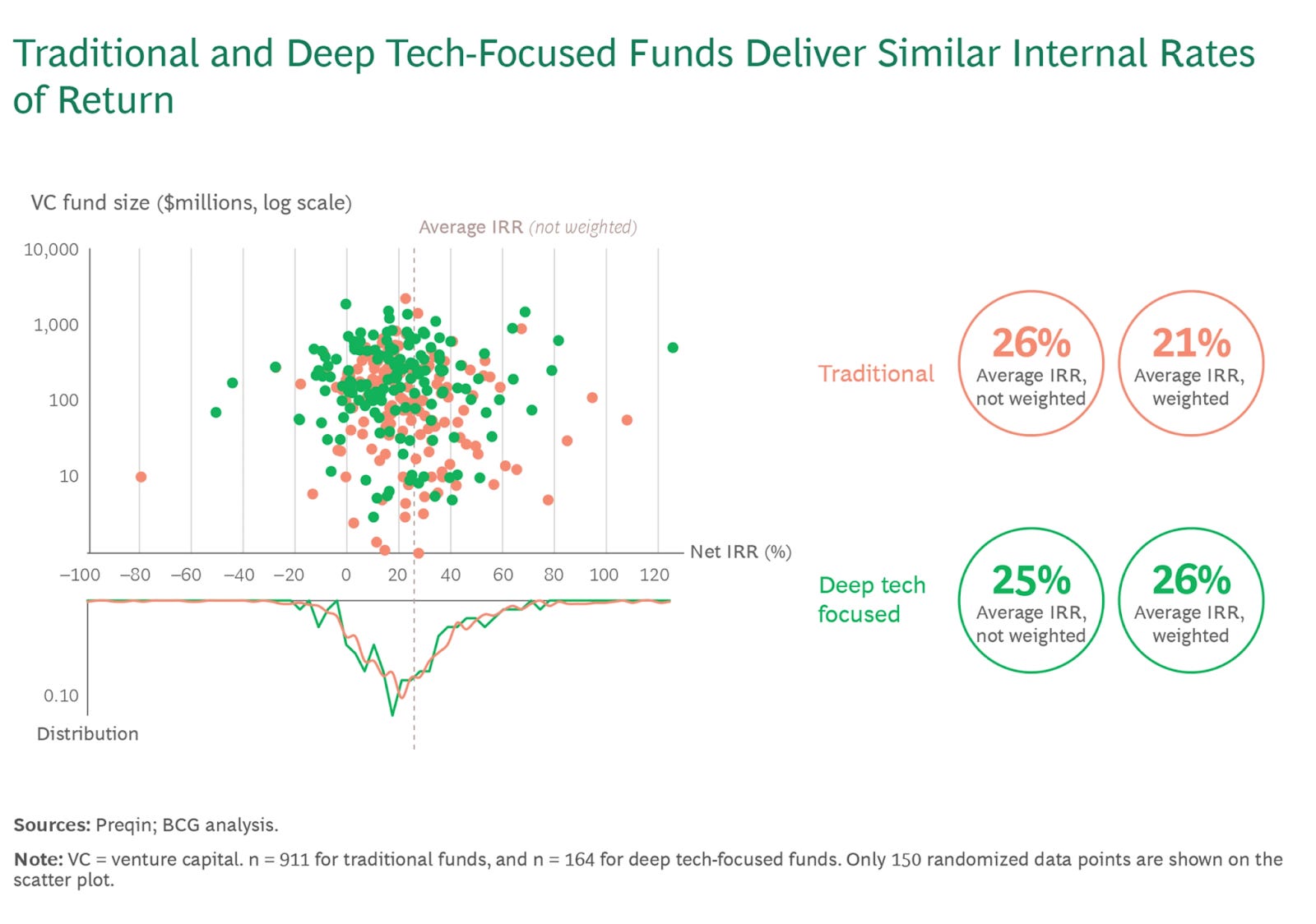
The Fall of Traditional Software Margins: Saturation in the software-as-a-service (SaaS) market, rising customer acquisition costs, and shrinking margins in digital consumer platforms have pushed investors to look for new frontiers. In contrast, deep tech offers a chance to disrupt and create foundational technologies for the next era of industrial growth. The shift in capital flow from software to hard tech is accelerating, as the “easy returns” on traditional software are diminishing, and deep tech is now seen as a high-potential area for asymmetric returns.
Acceleration of Research and Prototyping: Cheaper prototyping tools and access to cloud-based computational resources have drastically lowered the barrier for deep tech innovation. What used to take years in R&D can now be rapidly iterated in months, making the case for faster commercialization timelines.
Global Decarbonization Push: A global movement towards sustainability and net-zero carbon emissions is forcing industries and governments to invest heavily in clean energy, sustainable manufacturing, and energy-efficient technologies. Deep tech innovations are critical to achieving these goals, whether through advances in battery storage, hydrogen energy, or carbon capture
Deep Tech Funding: Trends, Drivers, and Inflection Points
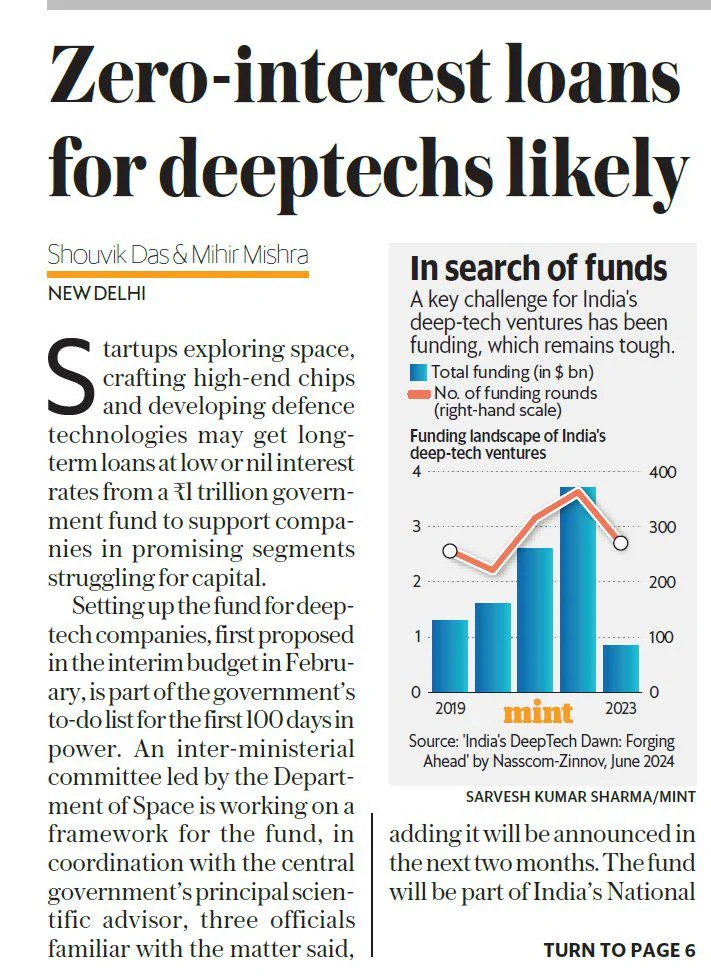
In recent years, deep tech investments in India have gained considerable traction, marking an inflection point in the country’s innovation landscape. The surge in funding for deep tech startups, particularly in areas like biotech, materials science, AI, and space technologies, demonstrates India’s increasing appetite for cutting-edge, transformative technologies. Beyond mere numbers, understanding the “why” behind the trend reveals key drivers and macroeconomic conditions fueling this investment boom.
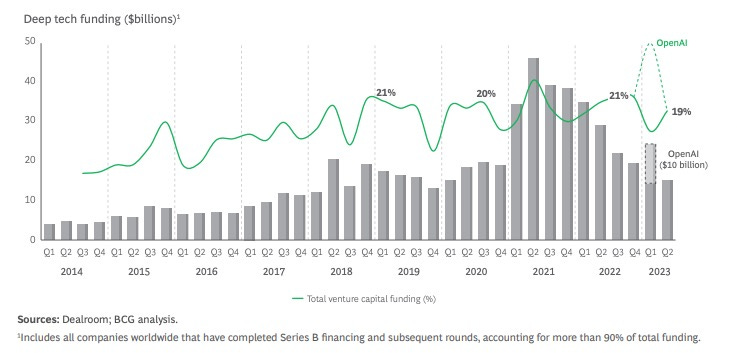
Global Deep Tech Funding
Deep Tech Funding in India
Source: Ankur Capital
Funding Trends and Key Insights:
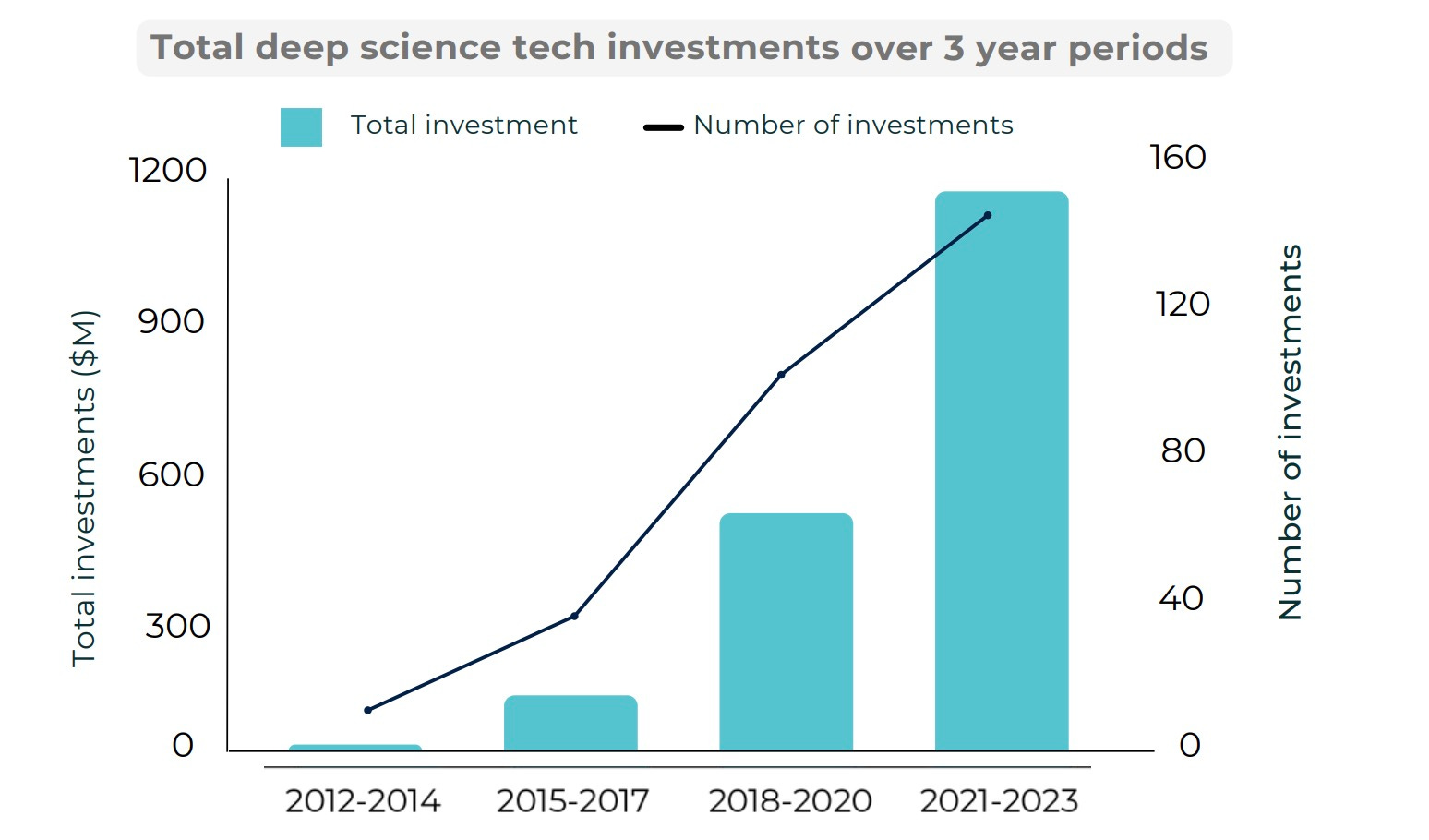
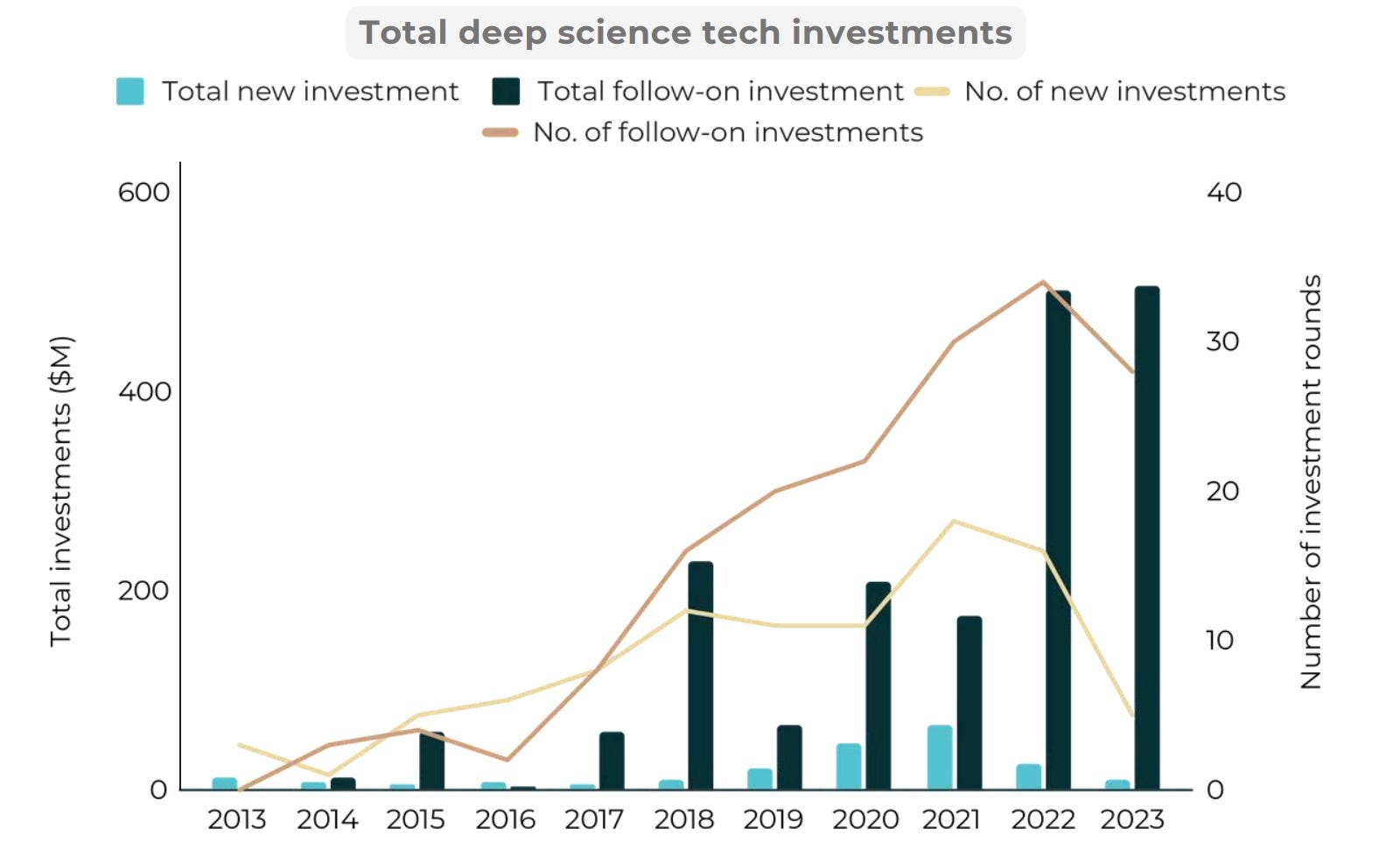
• Steady Growth in Funding: Over the last three years (2021-2023), deep science technology investments in India crossed $1 billion, doubling every three years. This consistent upward trend highlights the growing investor confidence in deep tech sectors. Even though the number of rounds is growing at a linear pace, the funding amounts have seen exponential growth, especially in rounds exceeding $5M
Deep Tech Funding in India
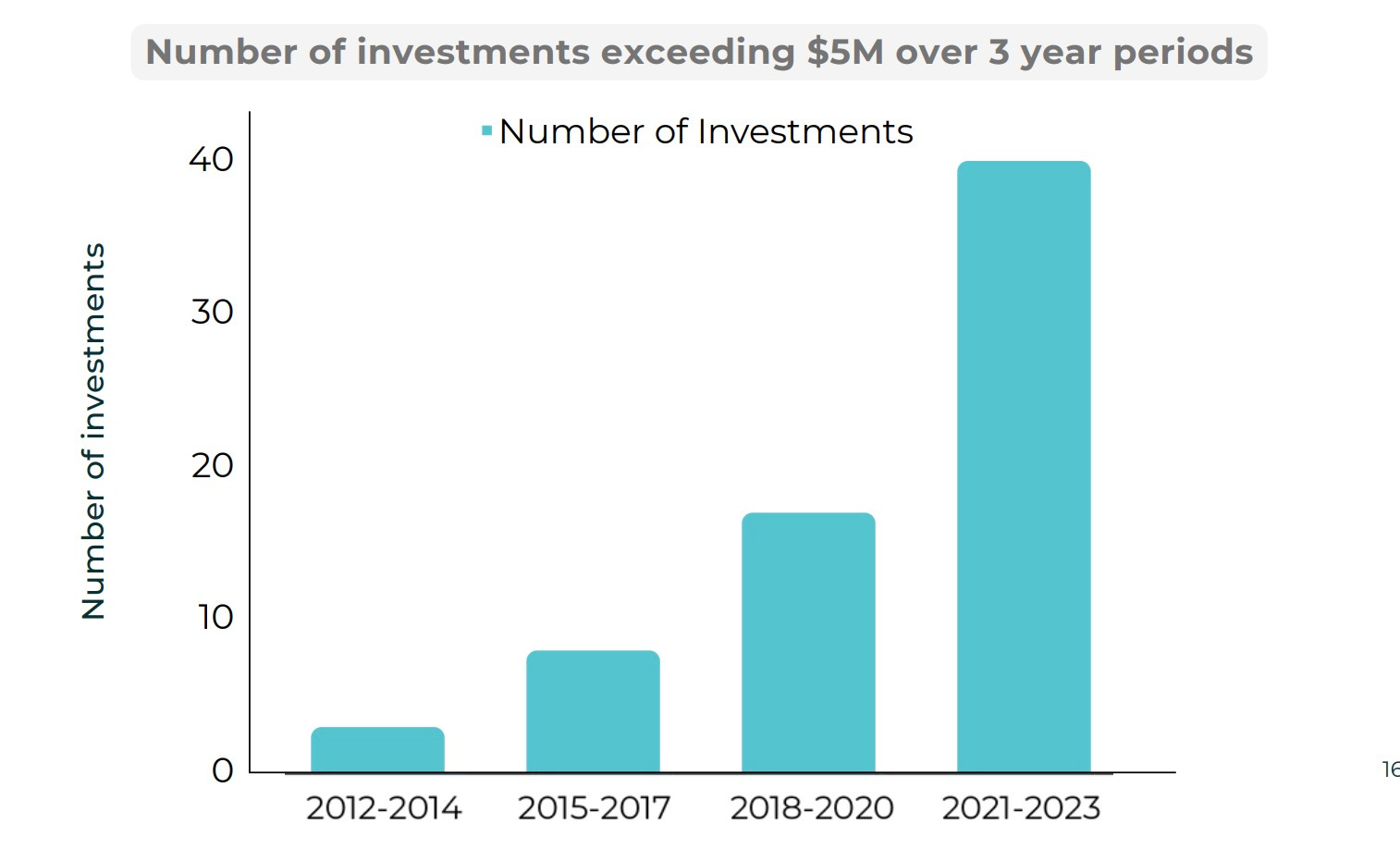
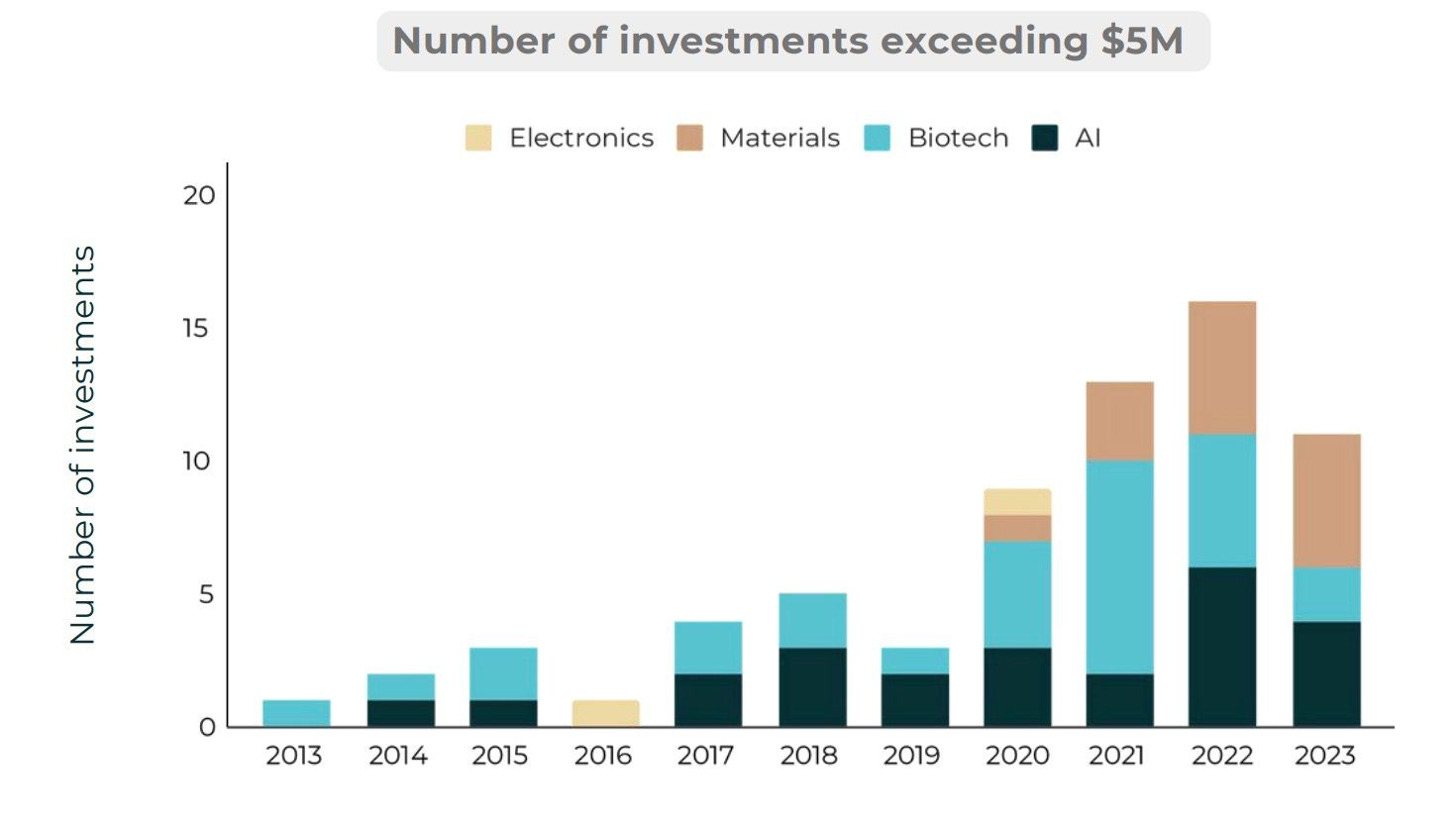
• Larger Investment Rounds: A key trend is the rise in growth-stage funding for deep tech startups, particularly in biotech and materials science, spurred by advancements in energy transition solutions, space tech, and sustainable manufacturing. The number of funding rounds exceeding $5M has doubled in each 3-year period, reflecting investors’ increased appetite for scaling startups in this space .
Deep Tech Investments in India
• Holistic Growth: While some outliers like Grey Orange have raised over $100M in a single round, the overall number of investment rounds is more evenly spread, signaling a growing interest across the entire sector rather than just a few high-profile companies .
• Follow-on Investments: The shift towards follow-on investments indicates investor commitment to deep tech startups. Post-2016, follow-on rounds surpassed new investments, demonstrating that investors are willing to double down on the scaling efforts of companies they initially backed . This is crucial for deep tech as it typically requires more time and capital to reach commercialization compared to other sectors like consumer tech.
Deep Tech Investments in India
Macro Trends and Tailwinds:
• Growing Demand for Innovation: Industries across sectors are facing challenges that cannot be solved by incremental technological advancements. Deep tech, with its potential for disruptive solutions in areas such as energy transition, healthcare, and automation, is becoming an essential driver of future growth.
• Government Support: Initiatives such as “Make in India” and focused policies on R&D in strategic areas like biotechnology, semiconductors, and space have created a favorable environment for deep tech innovation. Additionally, efforts in increasing research and innovation funding by the Department of Science & Technology (DST) and the establishment of technology incubators are paving the way.
• Global Supply Chain Disruptions: The recent supply chain disruptions, primarily caused by the COVID-19 pandemic and geopolitical tensions, have prompted industries to explore local innovations, making Indian deep tech startups crucial in the global innovation ecosystem.
Investment Drivers:
1. Energy Transition: With the global push towards decarbonization, investments in renewable energy solutions, battery technologies, and advanced materials have been on the rise. Deep tech companies are developing scalable solutions for energy storage and generation, which is attracting investors keen to capitalize on this transition.
2. Healthcare and Biotech: The pandemic has brought to light the importance of biotechnology and health tech. Startups working on precision medicine, AI in drug discovery, and sustainable healthcare solutions have received significant investments, underscoring the critical role of deep tech in solving future healthcare challenges.
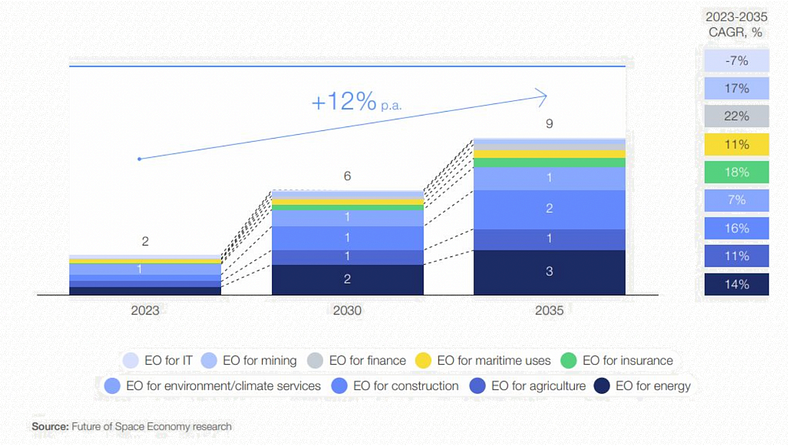
3. Space Tech: The democratization of space, with reduced launch costs and miniaturization of satellite technology, has brought attention to Indian startups developing low-earth orbit satellites, remote sensing technologies, and space infrastructure solutions. Investment in space tech is expected to continue its upward trajectory, with increased interest in Earth observation, satellite-based communications, and space-based energy solutions.
4. Advanced Manufacturing: The rise in robotics, autonomous systems, and 3D printing technologies has opened new avenues in precision manufacturing, especially for high-value sectors like aerospace and defense. With the global manufacturing sector eyeing supply chain resilience, deep tech solutions from India are playing a vital role in reshaping the sector.
Key Inflection Points Driving Deep Tech Investments
COVID-19 Pandemic: The pandemic accelerated investments in biotech, AI, and automation, underscoring the importance of advanced technologies in healthcare and resilient manufacturing.
CRISPR and Genetic Engineering: CRISPR-Cas9’s move from labs to clinical applications has unlocked potential in gene therapy and crop modification, driving significant investment in biotech.
GNoME (AI in Materials Science): Google DeepMind’s GNoME has fast-tracked materials discovery, identifying 381,000 materials for applications in renewable energy, computing, and more, drastically reducing R&D timelines.
Energy Crisis & Decarbonization: Global geopolitical tensions have heightened the demand for clean energy solutions, positioning deep tech startups in energy storage and renewables to thrive.
Space and Satellite Technologies: The falling cost of satellite launches and the rise of small satellites like CubeSats have spurred private investment in space tech, with Indian startups Pixxel and Agnikul leading the way.
Mission-Driven Talent Movement Toward Deep Tech: Deep tech startups are proving to be a magnet for mission-driven talent, creating a virtuous cycle of innovation, retention, and societal impact. Unlike the saturated software industry, deep tech offers an attractive environment where top-tier talent can work on long-term, meaningful projects while investors capitalize on outsized growth potential. The stickiness of talent in deep tech sectors, combined with fewer venture capital dollars chasing these breakthroughs, offers a contrarian opportunity for investors looking to diversify and capture the next wave of industrial and technological transformation. This confluence of talent, innovation, and market inefficiency is what sets deep tech apart, driving both immediate breakthroughs and long-term value creation.
Government Support as a Catalyst
The Indian government has made significant financial commitments to support deep tech innovation. These initiatives are playing a pivotal role in creating a conducive environment for startups and investors alike:
India Semiconductor Mission: INR 76,000 Cr.
India AI Mission: INR 10,371.92 Cr.
National Quantum Mission: INR 6,003.65 Cr.
National Mission on Interdisciplinary Cyber Physical Systems (NM-ICPS): INR 3,600 Cr.
National Supercomputing Mission: INR 4,500 Cr
Deep Tech Themes Overview
Deep Tech startups operate in sectors that leverage significant scientific or technological breakthroughs to solve complex problems across various industries. In the Indian context, Deep Tech is poised to disrupt multiple sectors by bringing forward innovations in robotics, quantum computing, energy storage, synthetic biology, and more. Here is a breakdown of key sectors, sub-sectors, relevant startups, and the challenges they face.
Deep tech startups typically focus on the following nine areas like:
Robotics and automation
Advanced Materials Science
Synthetic bioscience and technology
Energy storage and renewables
Quantum computing
Semiconductor design
Space/Satellite technologies
Aerospace and Defense
*AI/ML
Deep Tech startups span across diverse sectors, each driven by groundbreaking scientific and technological innovations. In the Indian context, these startups are rapidly evolving to address critical challenges across industries by leveraging advancements in robotics, energy, quantum computing, and more.
Demand and Supply Resonance Framework:
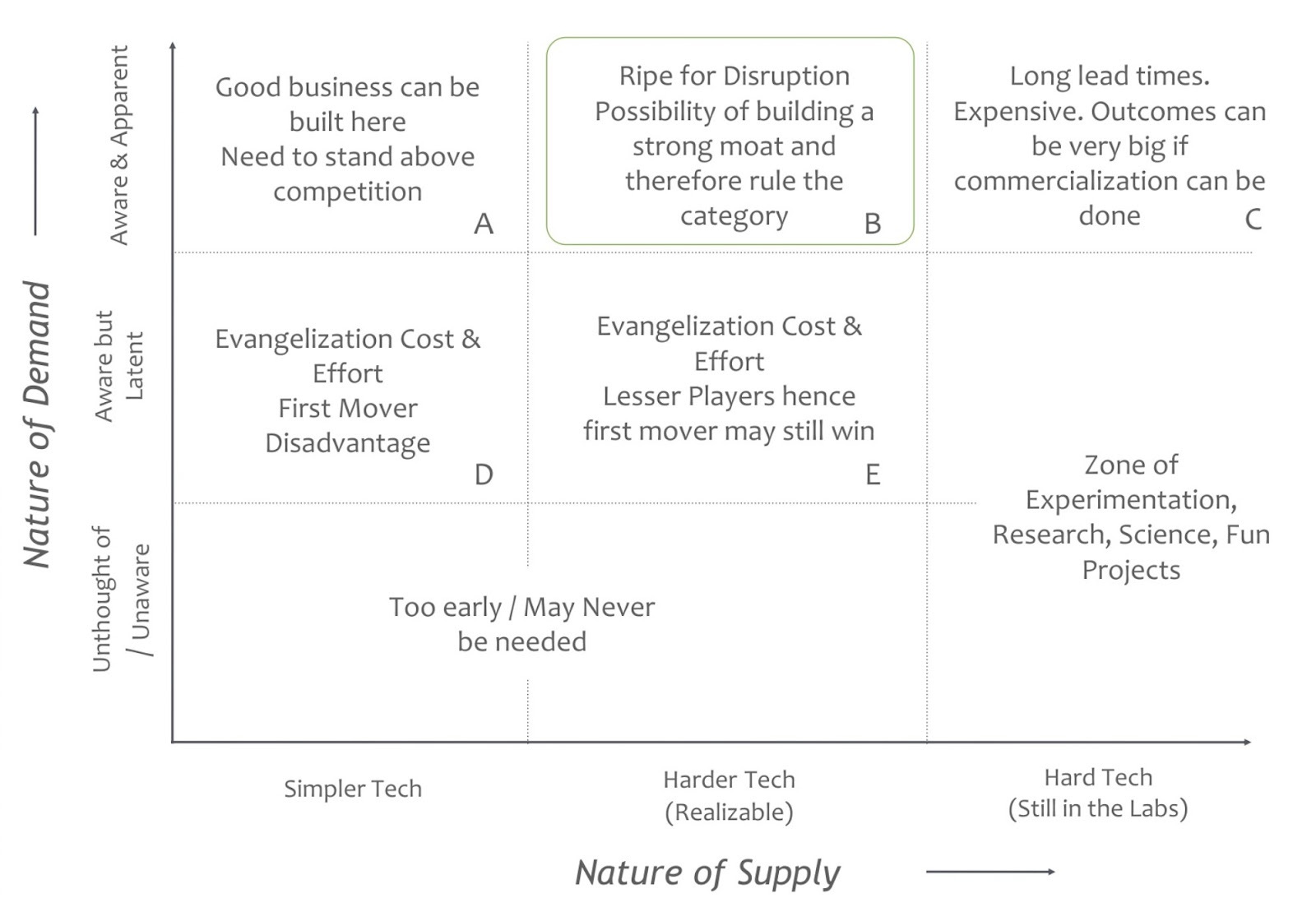
At its core, every startup can be mapped at the intersection of market demand and the technology solutions they provide. This framework, developed by a deep-tech-focused venture, illustrates how startups must navigate the dynamic relationship between the supply of technology and the demand for solutions. The key insight here is that this mapping is not static—it is in a constant state of flux, influenced by both technological advancements and shifts in market momentum.
Technology Progression: As technology matures, it becomes easier and cheaper to implement, which causes it to shift from more complex “hard tech” to realizable, market-ready innovations. Over time, these advancements push technologies from the right side (hard tech) to the left side (simpler tech).
Market Momentum: Market demand can either rise or fall based on external factors such as customer awareness, economic conditions, or competing technologies. In some cases, what was once latent demand can be brought to the forefront by new innovations, while other markets may see a decline in urgency or priority for a given solution.
Source: pi Ventures
Quadrants:
Quadrant A: Good business can thrive here, but requires standing out in a competitive market.
Quadrant B: Ripe for disruption with strong potential for category dominance if commercialized effectively.
Quadrant C: Long lead times and high costs, but potential for significant outcomes.
Quadrant D/E: High costs and effort for evangelization; could be risky without strong early adoption.
Inflection Point (Zone B): Represents an optimal area where technology and market readiness align, offering opportunities for startups to establish strong moats and dominate their sectors.
Deep Tech startups are evolving in two primary models: Vertical and Horizontal. Each approach offers a unique pathway to innovation, investment, and scalability, depending on the product’s application and market focus. Understanding these distinctions is key for investors to align resources and expectations.
Vertical vs. Horizontal Deep Tech Models:
Vertical Deep Tech
Vertical Deep Tech startups focus on full-stack, highly specialized solutions for specific industries. These startups often require deep domain expertise and longer development cycles but benefit from high defensibility and integration into niche workflows.
Examples:
Agnikul Cosmos: Builds cost-efficient, small satellite launch vehicles tailored for India’s space needs.
Niramai: Develops thermal imaging for breast cancer detection, addressing the specific healthcare needs of Indian women.
AjnaLens: Provides AR/VR solutions customized for defense applications like training and situational awareness.
Key Attributes:
Time Horizon: Longer time to exit, often due to extensive R&D.
Capital Profile: Highly capital-intensive, typically requiring $50M+ to scale.
Market Risk: Lower, as they serve niche, captive customer segments with specialized needs.
Defensibility: High, due to deep integration into specific workflows and industry standards.
Scalability: Generally lower, often scaling up to $500M-$1B in valuation due to narrower market applicability.
Horizontal Deep Tech
Horizontal Deep Tech startups create platforms, tools, or infrastructure that can be applied across multiple industries. These companies leverage emerging technologies like AI, quantum computing, or advanced materials and aim to drive widespread adoption across sectors.
Examples:
Pixxel: Provides high-resolution satellite imaging, useful across industries like agriculture, environmental monitoring, and urban planning.
Entropik: Develops emotion AI, which has wide applicability in sectors ranging from healthcare to marketing.
Segmind: Creates AI and machine learning tools that are broadly applicable across industries like healthcare, finance, and manufacturing.
Key Attributes:
Time Horizon: Shorter time to exit due to faster technology adoption.
Capital Profile: Less capital-intensive, requiring $15M–$30M for early scaling.
Market Risk: Higher, as they face fragmented customer bases and increased competition.
Defensibility: Lower, with platform technologies more vulnerable to replication by competitors.
Scalability: Much larger, with the potential for multi-billion-dollar valuations due to broader applicability across sectors.
Comparison Summary:
Vertical startups have higher defensibility but may take longer to scale, requiring more capital due to their focus on niche industries with specialized needs.
Horizontal startups, though riskier in terms of market competition, have greater scalability potential due to the versatility and wide applicability of their solutions across multiple sectors.
In the following sections, we will dive deep into each of the core sub sectors within Deep Tech, exploring their respective technologies, trends, and market opportunities. We will also analyze the key players driving innovation in each space, the challenges they face, and the unique opportunities that make these subsectors ripe for investment.
1. Robotics and Automation: Driving Efficiency Across Industries
Robotics and automation are at the forefront of the Fourth Industrial Revolution (Industry 4.0), transforming industries by increasing efficiency, reducing costs, and improving safety. India, with its vast industrial base, stands to benefit significantly from adopting robotics and automation across key sectors such as manufacturing, healthcare, agriculture, and logistics. These technologies not only enable businesses to scale but also help address challenges like labor shortages, quality control, and operational inefficiencies. Deep Tech innovations in robotics and automation can position India as a global leader in industrial and service automation.
Global Robotics Market size was valued at USD 34.06 Billion in 2022 and is poised to grow from USD 39.54 Billion in 2023 to USD 134.64 Billion by 2031, growing at a CAGR of 16.60% during the forecast period (2024-2031).
India industrial robotics market size was estimated at USD 4.92 billion in 2022. During the forecast period between 2023 and 2029, the size of India industrial automation market, only, is projected to grow at a CAGR of 12.60% reaching a value of USD 11.29 billion by 2029.
The robotics and automation sector can be divided into key sub-sectors based on application areas.
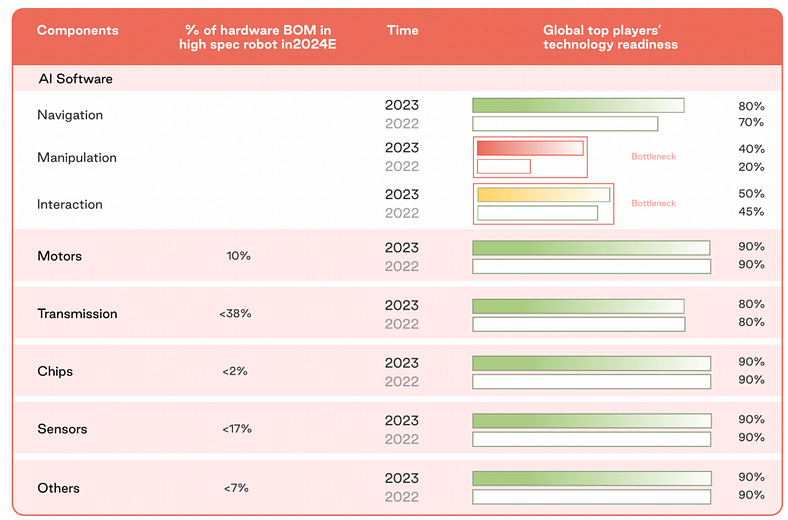
Advancements in AI are set to play a crucial role in hastening the shift towards more autonomous systems. For example, at GTC 2024, NVIDIA unveiled Project GR00T, a general-purpose foundational model for humanoid robot learning and execution. GR00T can link to large language models from third parties. It can process multimodal and natural language instructions, such as texts, videos, and VR demonstrations, and subsequently generate the next motion for robots to execute.Hardware in robotics is largely considered a solved problem, with future advancements expected to come from intelligent software, machine learning, and controls that enhance robotic dexterity for human-like tasks, such as object manipulation. Progress in end-to-end AI is set to improve interaction and manipulation capabilities, expanding robotics’ potential for generalized applications.
The rise of robotic foundation models, or MultiModal LLMs (MMLs), is anticipated, though challenges in natural language interaction, data collection (beyond images and text), annotation, and security remain. Early models like Google’s PaLM-E and RT-2 have shown promising developments.
Source: Lightspeed
The robotics and automation sector can be divided into key sub-sectors based on application areas:
1.1. Industrial Automation:
Overview:
Industrial automation integrates robotics, AI, and IoT to streamline manufacturing processes. Robots in factories can perform tasks like assembly, welding, painting, and material handling with high precision, reducing labor costs and increasing operational efficiency. The India Industrial Automation Market size is estimated at USD 15.12 billion in 2024 and is expected to reach USD 29.43 billion by 2029, growing at a CAGR of 14.26%.
Why This Sub-Sector:
Industrial automation is a cornerstone of Industry 4.0, with applications in automotive, consumer goods, and electronics industries. Automation reduces human error, maintains consistent quality, and enables rapid scaling.
Startups Making an Impact:
GreyOrange: Specializes in AI-driven warehouse and industrial robotics for inventory management and assembly line optimization.
Addverb: Provides customizable automation solutions for large manufacturing plants, integrating robotics with AI and machine learning.
Eureka Robotics: Eureka Robotics provides software and systems to automate tasks that require simultaneously High Accuracy and High Agility (HA-HA), across industries – from electronics, to automotive, to aerospace, to logistics.
Unique Challenges in Industrial Automation:
High Upfront Costs: The capital investment required to deploy robotics systems is substantial, which can be a deterrent for small and medium enterprises (SMEs).
Integration with Legacy Systems: Many industries still use outdated equipment, making the integration of modern robotic systems technically challenging.
Skilled Workforce: A shortage of trained personnel to operate and maintain robotic systems hinders scaling efforts.
1.2. Warehouse and Logistics Automation:
Overview:
With India’s logistics market expected to reach $215 billion by 2025, automation in warehouses and supply chains has become critical. Robotics for order fulfillment, inventory management, and last-mile delivery can significantly reduce labor costs and improve delivery speed. Automated guided vehicles (AGVs) and autonomous mobile robots (AMRs) are increasingly being used to automate routine tasks in warehouses.
Why This Sub-Sector:
The rapid growth of e-commerce and online retail has heightened the need for faster, more efficient order fulfillment processes, where robotics and automation play a pivotal role in managing high volumes of goods efficiently.
Startups Making an Impact:
Falcon Autotech: Develops integrated automation solutions for sorting, packaging, and delivery in large fulfillment centers.
CynLr: Focuses on developing industrial robots that can handle varied objects, aiming to scale robotic deployments in production lines.
GreyOrange: Provides AI-powered robots for warehouse operations, enabling better inventory management and faster order processing.
Unique Challenges in Warehouse and Logistics Automation:
Fragmented Market: India’s logistics sector is highly fragmented, making it challenging to implement standardized automation solutions across the board.
High Operational Costs: The deployment and maintenance of automation systems are costly, and many smaller logistics providers operate on tight margins.
1.3. Healthcare Robotics:
Overview:
India’s healthcare sector is projected to reach $638 billion by 2025, and robotics is playing an increasingly important role. Robotics in healthcare enables precision surgeries, automates diagnostic processes, and helps manage logistics like vaccine distribution. Robotics can improve efficiency in both urban and rural healthcare settings, including in medical diagnostics and surgery.
Why This Sub-Sector:
With an aging population and the rise of chronic diseases, healthcare robotics addresses labor shortages and enhances patient outcomes by improving precision and reducing recovery times.
Startups Making an Impact:
Blackfrog Technologies: Specializing in robotic cold-chain logistics for transporting vaccines to rural and underserved areas.
Sesto Robotics: Provides advanced robotic solutions for hospital operations and patient care.
Unique Challenges in Healthcare Robotics:
High Costs: Robotic surgical systems are expensive, limiting accessibility, particularly in rural hospitals.
Regulatory Hurdles: Regulatory approvals for healthcare robots are complex and time-consuming, and ensuring safety and accuracy is critical.
1.4. Precision Machining and Manufacturing:
Overview:
Precision machining, particularly 5-axis CNC (Computer Numerical Control) machining, is transforming industries like aerospace, healthcare, and automotive. Robotics integrated with CNC machining can reduce human error and increase productivity by automating complex tasks. The precision manufacturing market in India is projected to reach $15 billion by 2025.
Why This Sub-Sector:
High-precision industries require advanced robotics to automate complex machining tasks, ensuring accuracy, control, and consistent quality.
Startups Making an Impact:
Ethereal Machines: Specializes in 5-axis CNC machining and hybrid additive-subtractive manufacturing, creating precise parts for industries like aerospace and healthcare.
Macpower: The company's main offerings include the production of various types of CNC machines and lathe machines, which are used for precise, automated machining tasks in various industries.
Unique Challenges in Precision Machining and Manufacturing:
High Setup Costs: Precision machining systems are capital-intensive, limiting adoption by small and medium manufacturers.
Skilled Labor Shortages: There is a shortage of operators trained in advanced robotics and CNC machining technologies, slowing adoption.
1.5. Agricultural Robotics:
Overview:
India’s agriculture sector is expected to reach $24 billion by 2025, and robotics can play a crucial role in overcoming labor shortages and optimizing resource use. Agricultural robots equipped with AI and IoT can automate tasks such as planting, weeding, harvesting, and monitoring crop health, enabling higher yields and more sustainable farming practices.
Why This Sub-Sector:
Agricultural robotics addresses labor shortages and helps farmers adopt precision farming techniques to increase productivity while reducing costs.
Startups Making an Impact:
TartanSense: Creates small, AI-powered robots to identify and spray weeds with precision, reducing manual labor and improving efficiency.
Fasal: Uses AI-driven robotics and IoT to automate key agricultural tasks and gather real-time data for better crop management.
Unique Challenges in Agricultural Robotics:
Cost Sensitivity: Many farmers, especially smallholders, are extremely cost-sensitive, limiting their ability to invest in robotics.
Infrastructure Limitations: Many farms lack access to electricity and internet connectivity, both of which are essential for deploying robotics.
1.6. Drones and Autonomous Systems:
Overview:
The global drone market is expected to reach $43 billion by 2025, and India’s drone ecosystem is quickly growing in sectors like agriculture, logistics, defense, and construction. Drones offer a cost-effective way to gather data, monitor large areas, and even deliver goods in remote regions. The integration of AI and IoT has enabled drones to be used for precision agriculture, surveying, surveillance, and delivery services.
Why This Sub-Sector:
Drones are transforming sectors by enabling precision monitoring and data collection in industries such as agriculture, defense, and infrastructure, where human access is difficult or costly.
Startups Making an Impact:
ideaForge: A leader in developing drones for surveillance and mapping, widely used in defense and law enforcement.
Skylark Drones: Focuses on using drones for precision agriculture, infrastructure mapping, and inspection.
Airbound: Provides drone technologies for logistics and delivery services.
Garuda Aerospace: Focuses on drone-based solutions for agriculture and precision monitoring.
Challenges in Drones and Autonomous Systems:
Regulatory Hurdles: Strict regulations on drone usage, particularly for commercial purposes, create significant barriers to adoption.
Safety Concerns: Concerns around drone safety, data security, and potential airspace congestion hinder widespread use.
Robotics and automation hold immense potential for transforming various sectors across India, offering solutions to long-standing challenges like labor shortages, quality control, and supply chain inefficiencies. Indian startups in robotics are already making significant strides, driving innovation in both industrial and service sectors. As these technologies mature, the potential for scaling and integrating robotics and automation into the broader economy will be crucial for India’s role in the global tech landscape.
Right to Win in Robotics and Automation:
India’s robotics and automation sector offers immense potential, but capturing value in this growing industry requires a strategic approach that addresses both technological and market challenges. A successful “right to win” in this sub sector can be achieved through several key differentiators:
Local Adaptation and Customization: Startups like TartanSense and Addverb are developing scalable, cost-effective solutions tailored to the Indian market, addressing challenges like cost sensitivity and infrastructure limitations.
Collaboration with Industry and Government: Partnerships with initiatives like Make in India and Aatmanirbhar Bharat can unlock funding and deployment opportunities. Companies like Garuda Aerospace, Skylark drones and CynLr benefit from these collaborations to overcome fragmented markets.
Advanced R&D and IP Development: Firms like IdeaForge and Fasal are focusing on proprietary technologies to enhance efficiency and precision, ensuring competitiveness through continuous AI and IoT advancements.
Skilled Talent Development: Companies like Ethereal Machines and Falcon Autotech invest in upskilling local talent through collaborations with universities, ensuring access to the skilled workforce needed for innovation and scaling.
Cost Efficiency and Scalability: Startups such as Macpower and Skylark Drones are leveraging modular designs and innovative business models like Robotics-as-a-Service, and machining-as-a-service like Ethereal Machines, creating for the world to drive down costs and scale efficiently.
2. Advanced Materials Science: Innovating for Next-Generation Applications
Introduction:
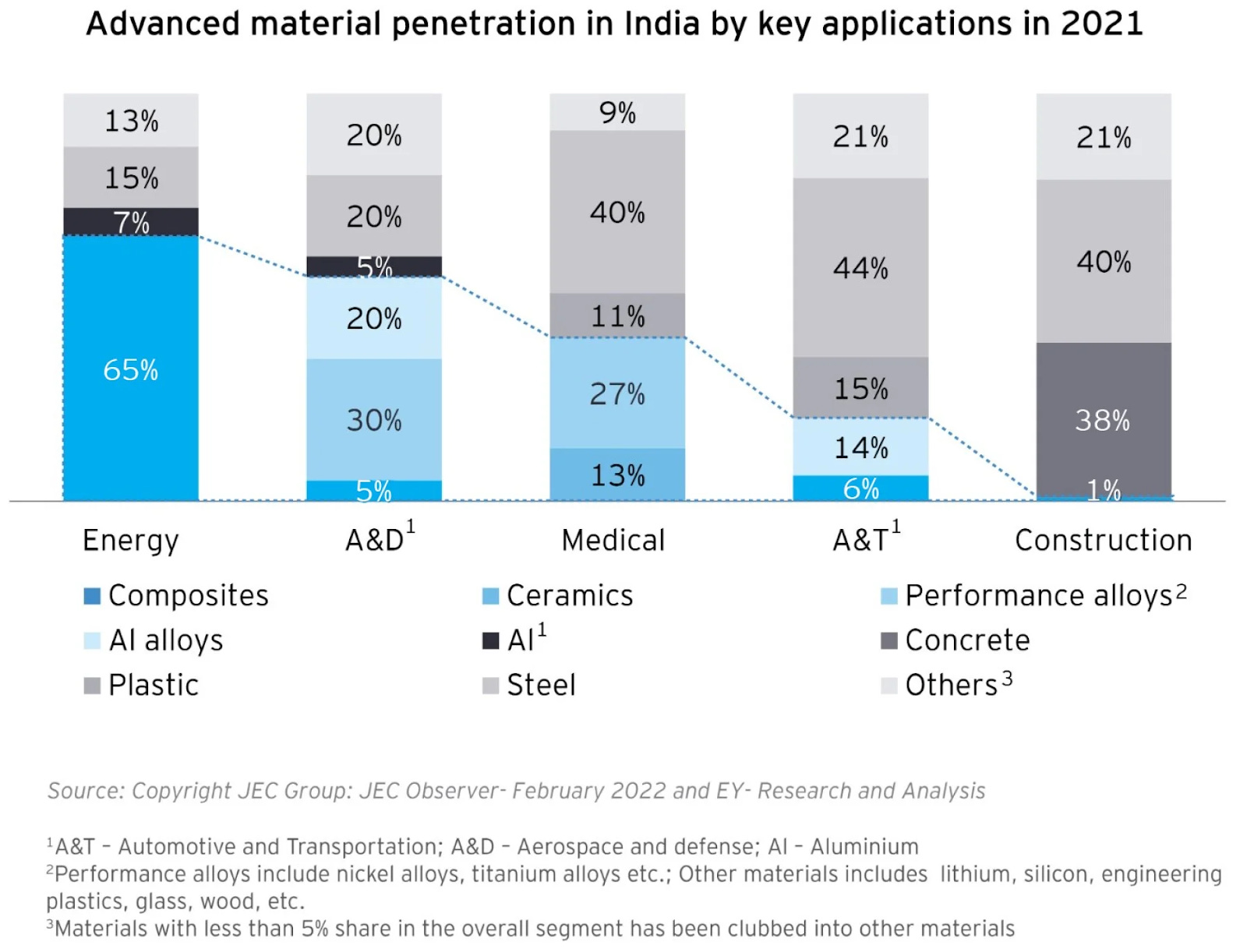
Advanced materials science is a critical component of the deep tech ecosystem, as innovations in materials often enable new technologies across industries such as energy, construction, healthcare, aerospace, and electronics. Materials with enhanced properties—such as strength, durability, lightweight composition, and improved energy efficiency—are transforming these sectors. The Indian advanced materials market is rapidly growing, driven by the need for sustainable solutions in manufacturing, energy storage, and infrastructure development. Advanced materials science is a key enabler for many next-generation technologies, and India is poised to emerge as a significant player in this space.
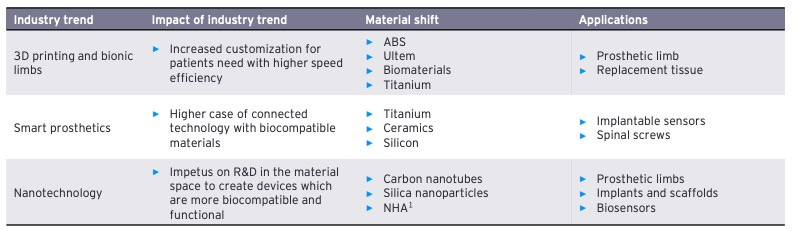
Source: Ansys, Prescouter, ICAO, BBVA, EY- Research and Analysis, NHA: Nano-hydroxyapatite
Market Opportunity:
The global advanced materials market size was estimated at USD 61.35 billion in 2022 and it is expected to hit around USD 112.7 billion by 2032, poised to grow at a CAGR of 6.27% from 2023 to 2032.
In India, with the government’s push for infrastructure development, renewable energy, and self-reliance in manufacturing, the advanced materials sector is projected to grow significantly, with applications spanning across industries such as construction, energy storage, and healthcare.
Sub-Sectors in Advanced Materials Science:
Sustainable Construction Materials
Energy Storage Materials
Wearable and Healthcare Materials
Nanomaterials for Electronics
Biomaterials: Engineering Materials for Biological Applications
Recent AI-Driven Breakthrough in Materials Discovery:
Advances in AI are now playing a significant role in materials science. Google DeepMind’s GNoME (Graph Networks for Materials Exploration) is a groundbreaking AI system that has discovered 2.2 million new stable crystal structures, including 381,000 materials with potential applications in renewable energy, computing, batteries, and more. These discoveries, equivalent to 800 years of traditional experimental research, could transform sectors ranging from clean energy to healthcare, pushing forward new technological possibilities.
How GNoME Works:
GNoME leverages graph neural networks to predict the stability of materials by examining their molecular structures. It continuously improves its predictions through an active learning loop, enhancing its ability to identify viable materials for experimental testing. Early successes include validating materials for batteries, solar cells, and superconductors.
Implications for Innovation:
This AI-driven approach could vastly accelerate the innovation cycle for industries reliant on new materials. Startups, for instance, can derisk technological failure and shorten development timelines by relying on AI predictions to identify high-potential materials, making commercialization faster and more efficient.
2.1. Sustainable Construction Materials:
Overview:
India is expected to become the third-largest construction market globally, with the industry valued at $1.4 trillion by 2025, contributing 9% to the country’s GDP. The sector is a significant recipient of foreign direct investment (FDI), with inflows of $33.91 billion in infrastructure activities from April 2000 to March 2024.
However, the industry faces challenges such as high carbon emissions and unsustainable practices. Advanced materials, including eco-friendly alternatives like carbon-neutral cement, high-strength lightweight composites, and sustainable insulation materials, are transforming the construction industry by reducing its environmental impact. These materials are key to meeting India’s ambitious climate goals and improving energy efficiency in buildings.
Why This Sub-Sector:Given the rapid urbanization and infrastructure development in India, there is a growing need for sustainable construction solutions. Advanced materials play a crucial role in reducing the carbon footprint of large infrastructure projects, making this sub-sector essential for future growth.
Startups Making an Impact:
Avrio: Focused on decarbonizing small real estate projects, Avrio is developing solutions to reduce carbon footprints in the real estate industry.
GreenJams: Creator of Agrocrete, the world’s first carbon-negative concrete, GreenJams helps build better, eco-friendly buildings while contributing to reversing climate change.
Challenges in Sustainable Construction Materials:
High Production Costs: Developing sustainable materials requires significant R&D and manufacturing costs, which can make them less competitive compared to traditional materials.
Adoption by the Construction Industry: Convincing construction companies to switch from traditional materials to sustainable alternatives is challenging due to long-standing practices and cost concerns.
2.2. Energy Storage Materials:
Overview:
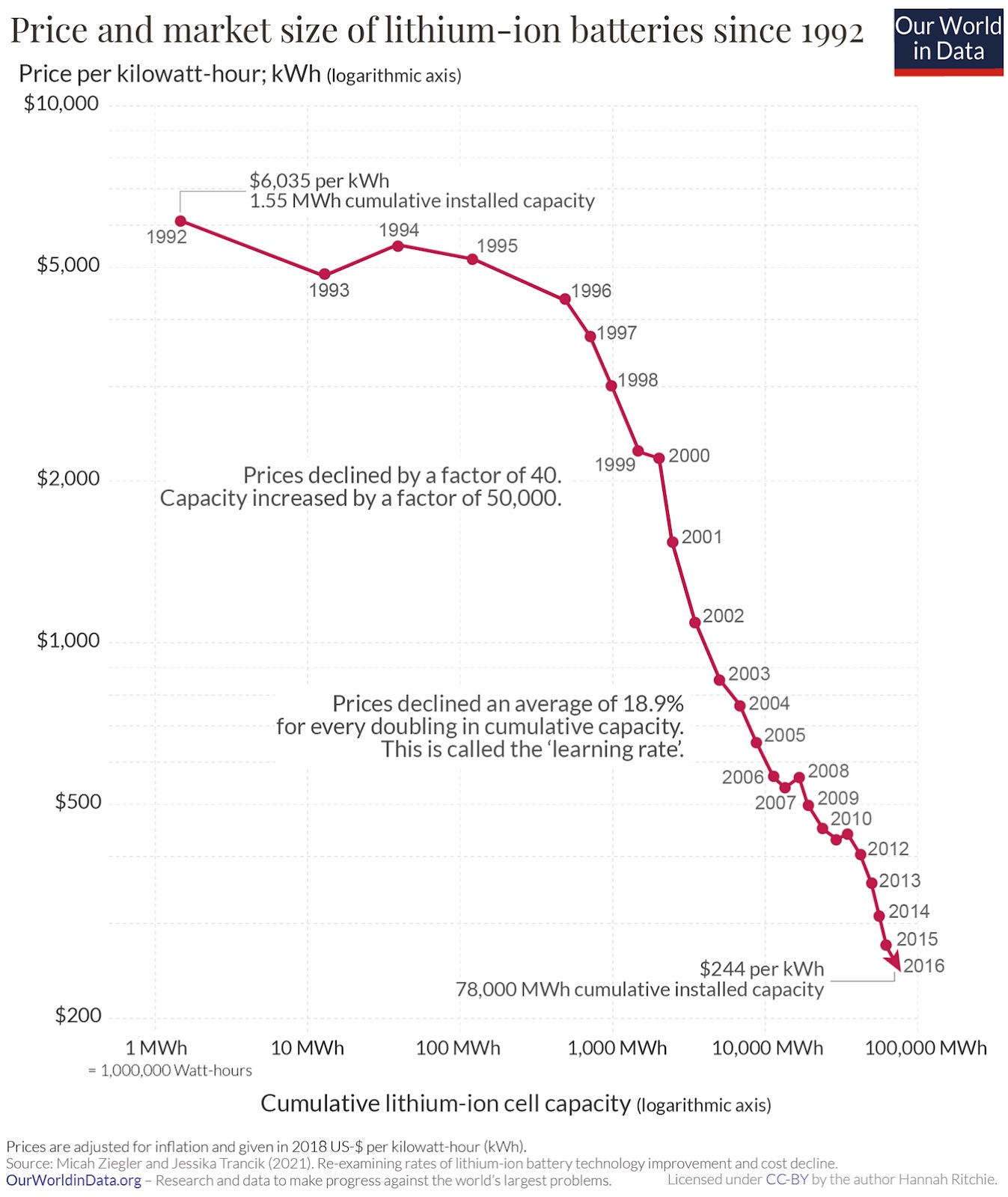
With India’s push toward renewable energy, the demand for advanced energy storage solutions is skyrocketing. Energy storage materials, including advanced battery chemistries such as lithium-sulfur, solid-state batteries, and graphene-based materials, are critical to improving the efficiency and scalability of renewable energy solutions. These materials enable more efficient storage of solar and wind energy, making it easier to integrate renewable power into the grid.
Why This Sub-Sector:
India aims to achieve 450 GW of renewable energy capacity by 2030, but this requires substantial improvements in energy storage technology. Advanced materials are key to enhancing the energy density, charging speed, and longevity of batteries and other storage systems, making this sub-sector essential for the transition to clean energy.
Startups Making an Impact:
Log9 Materials: Developing aluminum-air batteries that offer higher energy density and faster charging times, making renewable energy storage more efficient.
GegaDyne: Focused on graphene-based supercapacitors that provide higher energy density, faster charging times, and longer lifecycles, ideal for next-gen energy storage applications.
Epsilon Advanced Materials: A global leader in green battery materials, Epsilon produces high-performance solutions for Li-ion batteries and other energy storage applications, contributing to a greener planet
Nanomatrix Materials: Focuses on graphene-based materials for supercapacitors, which offer faster energy discharge rates and longer life cycles compared to traditional lithium-ion batteries.
Challenges in Energy Storage Materials:
Scalability: Many advanced energy storage materials are still in the experimental or early commercialization stages, making it difficult to scale them for widespread use.
Cost Efficiency: While advanced materials improve energy storage capabilities, they are often more expensive to produce than conventional batteries, limiting their market penetration.
2.3. Wearable and Healthcare Materials:
Overview:
The healthcare and wearable technology sectors rely heavily on advanced materials that are lightweight, flexible, and biocompatible. From prosthetics and implantable devices to flexible electronics and smart textiles, advanced materials enable innovation in medical devices and wearables, improving patient outcomes and offering personalized healthcare solutions.
Why This Sub-Sector:
As India’s healthcare market grows, the demand for wearable health monitors, implantable medical devices, and other advanced healthcare solutions is rising. Materials that improve the durability, biocompatibility, and functionality of these devices are essential for the future of healthcare.
Startups Making an Impact:
Nanomatrix Materials: Develops graphene-based materials for wearable sensors, offering high sensitivity and durability for continuous health monitoring.
Axio Biosolutions: Specializes in bioengineered materials for wound care and implantable medical devices, improving patient outcomes and reducing infection risks.
Challenges in Wearable and Healthcare Materials:
Regulatory Approval: Materials used in healthcare devices must go through stringent regulatory approval processes, which can delay commercialization.
Cost of R&D: Developing advanced materials for healthcare applications requires significant investment in research and testing, increasing the time and cost to market.
2.4. Nanomaterials for Electronics:
Overview:
Nanomaterials, including graphene, carbon nanotubes, and quantum dots, are driving innovation in the electronics sector. These materials enable the development of smaller, faster, and more energy-efficient electronic devices. Nanomaterials are used in everything from flexible displays to high-speed processors and energy-efficient semiconductors, making them essential for next-generation electronics.
Why This Sub-Sector:
With the rise of 5G, the Internet of Things (IoT), and artificial intelligence (AI), there is an increasing need for advanced electronic materials that offer higher performance and energy efficiency. Nanomaterials enable these technologies to scale and improve, making this sub-sector critical for the future of electronics.
Startups Making an Impact:
NoPo Nanotechnologies: Manufacturer of single-walled carbon nanotubes for use in high-performance electronics and next-generation applications.
Al-Zira Technology: A leader in nanotechnology innovation, Al-Zira is at the forefront of providing cutting-edge solutions for various industries, including electronics.
Challenges in Nanomaterials for Electronics:
Production Costs: Scaling the production of nanomaterials to meet the demands of the electronics industry is expensive and technically challenging.
Supply Chain Limitations: The materials required for nanomaterial production are often scarce, leading to supply chain challenges and fluctuating costs.
2.5. Biomaterials: Engineering Materials for Biological Applications
Biomaterials are materials specifically designed to interact with biological systems for therapeutic, diagnostic, and regenerative purposes. These materials play a crucial role in advancing fields such as tissue engineering, drug delivery, biomedical devices, and regenerative medicine. Biomaterials must possess properties like biocompatibility, mechanical strength, and degradability to be effective in biological environments. The global biomaterials market was valued at USD 135.87 billion in 2022 and is expected to hit USD 431.49 billion by 2032, growing at a noteworthy CAGR of 12.3% from 2023 to 2032, and India’s growing healthcare market creates a substantial opportunity for biomaterials innovation.
India’s burgeoning healthcare sector, along with the global demand for advanced medical technologies, has created significant opportunities for biomaterials. As Indian startups dive into bioengineering and healthcare innovations, biomaterials will play a central role in the development of implantable devices, tissue scaffolds, and biodegradable materials for drug delivery.
Why This Sub-Sector:
With the increasing demand for advanced medical devices, wound care solutions, and drug delivery systems, biomaterials offer the potential to revolutionize patient care. Biomaterials are essential for enabling new technologies in healthcare, making this sub-sector key for both domestic and international markets. Additionally, as India focuses on self-reliance in healthcare, biomaterials will be vital to reducing dependence on imported medical technologies.
Startups Making an Impact:
Axio Biosolutions: A pioneer in bio-engineered wound care materials, Axio’s products are used for controlling bleeding and infection in trauma and surgical patients. Their hemostatic products are biodegradable and enhance recovery times.
Nanosafe Solutions: Developer of antimicrobial technology using copper nanoparticles, contributing to safer medical devices and healthcare environments.
BioPrime AgriSolutions: Developing nano-based biological crop nutrition with potential healthcare applications through bioactive and tech-enabled systems.
Challenges in Biomaterials:
Regulatory Hurdles: Biomaterials, especially those used in medical devices or drug delivery systems, must undergo rigorous clinical testing and receive approval from regulatory bodies. This approval process can be lengthy and expensive.
Scalability: Developing biomaterials that meet both biological compatibility and scalable manufacturing requirements is a challenge. Many biomaterials perform well in laboratory settings but are difficult to produce at commercial scale.
Cost of R&D: The research and development phase for biomaterials is resource-intensive, requiring significant investment in clinical trials and testing before they can be brought to market.
Challenges in Advanced Materials Science:
Despite the potential for transformative impact, the advanced materials science sector faces several key challenges:
High R&D Costs: Developing new materials requires significant investment in research and testing, which can delay commercialization and make scaling difficult.
Regulatory Approvals: In sectors like healthcare and construction, materials need to pass rigorous regulatory approvals, which can be time-consuming and expensive.
Market Adoption: Convincing industries to switch from traditional materials to new advanced materials can be difficult, especially when cost savings are not immediately apparent.
Right to Win in Advanced Materials Science
To capture value and build a leading position in the rapidly growing advanced materials sector, Indian startups must focus on strategic differentiation and market alignment. A “right to win” in this space can be achieved through a few critical strategies:
Pioneering Sustainability and Green Solutions:
In a market increasingly driven by environmental concerns, sustainability is not just a trend but a necessity. Startups like GreenJams and Bambrew are leading the way with carbon-negative materials and biodegradable packaging, meeting both regulatory demands and consumer expectations for eco-friendly solutions. The shift towards a circular economy gives these companies a distinct advantage as global markets increasingly prioritize sustainable practices.
Leveraging AI and Advanced R&D for Material Discovery:
Innovation in materials often hinges on deep R&D capabilities. Startups like NoPo Nanotechnologies and Al-Zira Technology are tapping into cutting-edge fields like nanotechnology and AI-driven material discovery, positioning themselves at the forefront of the next wave of material science breakthroughs. The ability to accelerate innovation through AI, as seen in breakthroughs like GNoME, gives a significant advantage in bringing new materials to market faster than ever before.
Addressing Market-Specific Challenges with Custom Solutions:
Startups that tailor their solutions to address India’s unique market needs—such as its infrastructure demands, energy transition, and agricultural requirements—will find the most success. For example, Log9 Materials and Epsilon Advanced Materials are focusing on energy storage solutions crucial for India’s renewable energy goals, while BioPrime AgriSolutions addresses the critical need for sustainable agricultural practices through nano-based crop protection.
Building Strategic Collaborations for Scale:
Collaboration with key industries and government initiatives like Aatmanirbhar Bharat will be pivotal in scaling innovations. Companies like Avrio are focusing on real estate decarbonization, benefiting from both government and private sector interest in sustainable infrastructure. These collaborations also provide access to essential funding and regulatory support that help accelerate market adoption.
Developing Proprietary Technologies with Strong IP Protection:
In the highly competitive field of advanced materials, intellectual property (IP) is key to defensibility. Startups like GegaDyne and NanoSniff are developing proprietary technologies that will protect their innovations and give them a long-term competitive edge. A strong IP portfolio not only secures market position but also opens doors for licensing and partnerships globally.
Cost-Effective Scaling and Market Adoption:
Advanced materials often face challenges related to high production costs. Startups like Nanomatrix Materials and Nanosafe Solutions are finding ways to balance performance with cost efficiency, enabling them to achieve broader market penetration. By focusing on scalable, affordable solutions, these companies can compete with traditional materials while offering superior benefits.
3. Synthetic Bioscience: Engineering Life for Transformative Applications
Introduction:
Synthetic biology is emerging as one of the most revolutionary fields in modern science and technology. It represents the design and construction of new biological parts, devices, and systems or the re-design of existing natural biological systems for useful purposes. The promise of synthetic biology lies in its potential to address some of the most pressing global challenges, such as sustainable agriculture, renewable energy, medicine, and environmental protection. By engineering organisms to perform specific tasks or produce valuable compounds, synthetic biology can unlock solutions across sectors like healthcare, food production, materials, and bioenergy.
Macro Trends: Global to India Overview
The global synthetic biology market size was estimated at USD 16.35 billion in 2023 and is expected to hit around USD 148.93 billion by 2033, poised to grow at a CAGR of 25% between 2024 and 2033. The U.S. synthetic biology market was valued at USD 4.81 billion in 2023.
Region
2022
2023
2027
2032
North America
5.36
6.51
14.61
44.15
Europe
3.75
4.59
10.59
33.15
APAC
3.35
4.12
9.74
31.42
LAMEA
0.94
1.14
2.51
7.33
The synthetic biology field is being fueled by several macro-level trends. These include the rapid development of gene-editing tools such as CRISPR-Cas9, decreasing costs for DNA sequencing and synthesis, AI-driven biodesign, and the need for sustainable solutions in the face of environmental and food security challenges.
In India, synthetic biology is becoming an essential tool in addressing national challenges such as food security, healthcare access, energy needs, and sustainability goals. Government initiatives and investments in the biotechnology sector, combined with the rising number of synthetic biology startups, position India as a key player in this space. The Indian synthetic biology market is still nascent but holds immense potential for growth, with applications across agriculture, healthcare, and industrial biotechnology. India’s strong biotechnology ecosystem, along with its strengths in IT and bioinformatics, provides the foundational elements needed for success in synthetic biology.
Sub-Sectors in Synthetic Bioscience and Technology
Sub-Sectors of Synthetic Biology:
Synthetic Biology R&D Platforms
Biomanufacturing Infrastructure
Sustainable Ingredients and Alternative Materials
Regenerative Medicine
Agriculture Enhancements and Alternative Protein
3.1. Synthetic Biology R&D Platforms
Overview:
Synthetic biology R&D platforms accelerate innovation by automating workflows, utilizing AI for strain engineering, and providing bioinformatics tools to streamline the design-build-test cycles. These platforms are essential for reducing time and costs associated with synthetic biology development, enabling rapid prototyping, and optimizing the creation of synthetic biological systems. They cover a wide range of applications, including genetic engineering, enzyme design, and microbial strain optimization.
Why This Sub-Sector:
The growing demand for faster development cycles and more efficient experimentation processes has spurred the rise of R&D platforms in synthetic biology. These platforms democratize access to advanced synthetic biology tools, reducing the barriers to entry for startups and research institutions. With the global synthetic biology market expected to grow significantly, the need for scalable, efficient, and automated R&D solutions is crucial.
Startups Making an Impact:
Benchling: A cloud-based platform that provides tools for managing biological data, enabling teams to collaborate, design, and analyze biological experiments more efficiently.
Synthego: Automates genome engineering using AI and robotics, streamlining the process of gene editing and making it more affordable and scalable.
ATUM: Specializes in DNA assembly automation, enabling the rapid production of DNA libraries and gene fragments.
Ginkgo Bioworks: Uses automation and AI to design custom microbes for various industries, from agriculture to consumer goods.
Strand Life Sciences: Provides bioinformatics solutions that integrate AI-driven analysis for research, diagnostics, and therapeutic applications.
Challenges:
1.Cost of Automation: Building and maintaining automated R&D platforms require significant upfront investments, which can be challenging for smaller companies.
2.Data Integration: Managing large volumes of biological data from automated experiments requires advanced tools for data integration and analysis, which can become complex.
3.Scalability: As the complexity of synthetic biology projects grows, platforms must scale to accommodate increasingly sophisticated demands, creating a technological and infrastructure challenge.
3.2. Biomanufacturing Infrastructure
Overview:
Biomanufacturing infrastructure provides the necessary facilities and technologies to produce synthetic biology products at an industrial scale. It is essential for transitioning innovations from the lab to the market, supporting industries like biofuels, pharmaceuticals, and biomaterials. This sub-sector focuses on scaling bioproduction processes, enabling synthetic biology innovations to reach commercial viability.
Why This Sub-Sector:
As synthetic biology products, such as bio-based chemicals, sustainable materials, and biotherapeutics, gain market traction, scalable biomanufacturing infrastructure is crucial. Efficient biomanufacturing can reduce production costs, enhance quality control, and ensure that synthetic biology innovations are commercially feasible.
Startups Making an Impact:
Fermbox: Provides biomanufacturing-as-a-service, enabling startups to produce biomaterials without heavy capital investments in infrastructure.
Amyris: Focuses on contract manufacturing, sustainably producing ingredients for industries like cosmetics and pharmaceuticals.
Culture Biosciences: Specializes in regional biomanufacturing hubs, allowing decentralized production of synthetic biology products.
BioBrew: Develops microbial fermenters for on-site production, offering localized solutions for biomanufacturing.
Challenges:
High Capital Costs: Setting up biomanufacturing infrastructure requires significant capital investment, particularly for scaling up production.
Supply Chain Management: The availability of specialized ingredients, such as enzymes or cell culture media, poses challenges for consistent biomanufacturing.
Quality Control: Ensuring consistency and quality in biomanufacturing processes, particularly at scale, remains a complex challenge for synthetic biology companies.
3.3. Sustainable Ingredients and Alternative Materials
Overview:
Synthetic biology enables the creation of biomaterials and sustainable ingredients that serve as eco-friendly alternatives to traditional products. These innovations range from biodegradable plastics to microbial-based textiles and renewable fibers, contributing to the reduction of environmental impact while providing scalable industrial solutions.
Why This Sub-Sector:
There is a growing global demand for sustainable alternatives to plastic and other non-renewable materials. Synthetic biology allows for the development of biodegradable, carbon-negative products that can help industries reduce their environmental footprints. This sub-sector directly addresses sustainability goals and provides long-term economic value for industries like fashion, packaging, and consumer goods.
Startups Making an Impact:
Bambrew: Focuses on developing biodegradable packaging solutions to replace plastic in consumer goods.
Bolt Threads: Uses microbial fermentation to produce next-gen silk and leather alternatives.
LanzaTech: Converts industrial waste gases into ethanol and other valuable chemicals, creating a circular economy in chemical production.
Amyris: Specializes in microbial production of natural fragrances and sustainable cosmetic ingredients.
Challenges:
Cost Competitiveness: Biomaterials often face higher production costs compared to traditional materials, making it challenging to compete on price.
Consumer Acceptance: Educating consumers about the benefits of biomaterials and encouraging their adoption remains a challenge.
Scaling Production: Producing biomaterials at an industrial scale to meet global demand remains a significant challenge, particularly when using novel biological processes.
3.4. Regenerative Medicine
Overview:
Regenerative medicine uses synthetic biology to create novel therapies for treating disease, restoring tissue, and even growing organs. This sub-sector focuses on cell and gene therapies, tissue engineering, and bioprinting, offering revolutionary treatments for conditions that currently lack effective solutions.
Why This Sub-Sector:
As healthcare moves toward personalized medicine, synthetic biology provides the tools to create patient-specific treatments, including custom-engineered cells and tissues. With the rise of chronic diseases and organ shortages, regenerative medicine has the potential to dramatically improve patient outcomes and healthcare delivery.
Startups Making an Impact:
Pandorum Technologies: Innovates in 3D bioprinting, creating corneas and other tissues using bioink and stem cells.
TeOra: Specializes in oral vaccine delivery using synthetic biology platforms, offering an innovative approach to drug delivery.
Challenges:
Regulatory Hurdles: Gaining approval for synthetic biology-based therapies, particularly gene therapies, involves complex and lengthy regulatory processes.
High Development Costs: The cost of developing synthetic biology-based therapies is extremely high, especially in the early stages of R&D.
Patient Safety: Ensuring the long-term safety of synthetic biology treatments, particularly for gene editing and engineered tissues, remains a significant concern for regulators and healthcare providers.
3.5. Agriculture Enhancement and Alternative Protein
Overview:
Synthetic biology offers transformative solutions for agriculture by engineering crops, developing microbial inoculants, and producing alternative proteins. These innovations help enhance crop resilience, reduce chemical use, and provide sustainable protein sources, addressing critical challenges in global food security and agricultural sustainability.
Why This Sub-Sector:
With increasing pressure on global food systems due to climate change, soil degradation, and population growth, synthetic biology has the potential to provide sustainable agricultural solutions. Engineered microbes can reduce dependency on chemical fertilizers, while alternative proteins can address the growing demand for meat substitutes.
Startups Making an Impact:
BioPrime AgriSolutions: Develops microbial seed coatings that improve crop growth and resilience to environmental stressors.
ClearMeat: Innovates in cultured meat production, providing an ethical and sustainable alternative to traditional meat.
Earthy Foods: Uses microbial biopesticides to promote sustainable agriculture by reducing reliance on chemical pesticides.
Challenges:
Adoption Barriers: Convincing traditional farmers to adopt synthetic biology solutions is challenging due to cost concerns and lack of awareness.
Regulatory Approval: Gaining approval for genetically modified crops or biocontrol agents can be a lengthy process, particularly in regions with stringent regulations.
Scalability: Scaling synthetic biology solutions for agriculture, particularly in regions with smallholder farmers, remains a challenge in terms of affordability and accessibility.
Right to Win in Synthetic Bioscience and Technology
India has a unique opportunity to lead in synthetic biology due to its well-established strengths in biotechnology, IT, and bioinformatics, alongside a strong focus on sustainability and healthcare innovation. Government support through policies and investments in the biotechnology sector, coupled with a growing pool of talented scientists and entrepreneurs, has positioned India as an emerging hub for synthetic biology innovation. India’s agricultural demands, energy needs, and sustainability goals create a fertile ground for synthetic biology to address key challenges, while its ability to leverage IT and bioinformatics for advancements in R&D platforms and biomanufacturing gives it a competitive edge.
Startups like Bambrew, which focuses on biodegradable packaging solutions to tackle plastic waste, and ClearMeat, which innovates in cultured meat production, exemplify India’s potential to create sustainable alternatives to traditional industries. In healthcare, companies like Eyestem are driving forward personalized medicine through affordable cell therapies for retinal diseases, while Strand Life Sciences is pioneering bioinformatics solutions that integrate AI-driven analysis for diagnostics and therapeutic applications.
By fostering collaboration between research institutions, industries, and policymakers, and capitalizing on local needs and strengths, India can secure its “right to win” in this transformative field. Strategic investments in startups like these will allow India to position itself as a global leader in synthetic bioscience innovation, solving national and global challenges through technology-driven, sustainable solutions.
4. Energy Storage and Alternative Renewables: Powering the Future with Sustainable Technologies
Introduction:
Energy storage and renewable technologies are pivotal in driving the global transition toward clean energy. With the increasing shift away from fossil fuels, the world is embracing sustainable solutions like solar, wind, and hydropower to meet growing energy demands. However, these renewable energy sources are intermittent, necessitating advanced energy storage systems to ensure a reliable supply. The energy storage industry is critical for ensuring that renewable energy can be stored and distributed efficiently, especially in regions with variable renewable energy output.
Macro and Market Trends: Global to India Overview
Globally, Energy Storage will reach an annual combined deployment level of 3,046GWh, and a total market value of over $546 billion by 2035. Stationary storage is expected to grow to $111.8 billion in revenue over the next ten years. This growth is driven by the need to manage intermittent renewable energy sources and support the electrification of transport through electric vehicles (EVs). In India, while renewable energy sources are rapidly expanding, the grid is not yet fully equipped to manage the variability of renewable power generation. This presents a huge opportunity for deep tech innovations in advanced battery technologies, grid management systems, and green hydrogen solutions.
India, with its ambitious target of achieving 450 GW of renewable energy capacity by 2030 and reducing its carbon footprint by 45% by 2030, requires substantial innovations in energy storage. The country’s rapidly growing electric vehicle (EV) market and urbanization are driving the need for efficient energy storage solutions to maintain energy grid stability and meet demand. India is one of the fastest-growing markets for renewable energy but faces significant challenges in scaling infrastructure and storage solutions. This context opens up extensive opportunities for startups working on battery recycling, energy storage, and next-generation renewable technologies.
Sub-Sectors in Energy Storage and Renewables
Battery Storage Technologies
Grid Management and Integration
Green Hydrogen and Alternative Storage Solutions
Battery Recycling
4.1. Battery Storage Technologies
Overview:
Batteries are at the forefront of energy storage solutions, enabling the capture, storage, and distribution of energy from renewable sources. Innovations in battery technologies, such as solid-state batteries, lithium-sulfur, aluminum-air, and graphene-based batteries, offer superior energy density, faster charging times, and longer life cycles compared to traditional lithium-ion batteries.
Why This Sub-Sector:
India aims to have 30% of its vehicles electrified by 2030, driving an exponential demand for high-density batteries to power electric vehicles (EVs) and store energy for grid use. Additionally, as renewable energy continues to grow, large-scale battery storage solutions will be crucial for ensuring consistent power supply.
Startups Making an Impact:
Log9 Materials: Specializes in aluminum-air batteries with higher energy density and faster charging times, supporting both the EV and grid storage markets.
Nunam: Builds energy storage devices that run on used lithium-ion batteries.
Challenges:
Cost Efficiency: Advanced batteries, while more efficient, are still expensive to produce at scale.
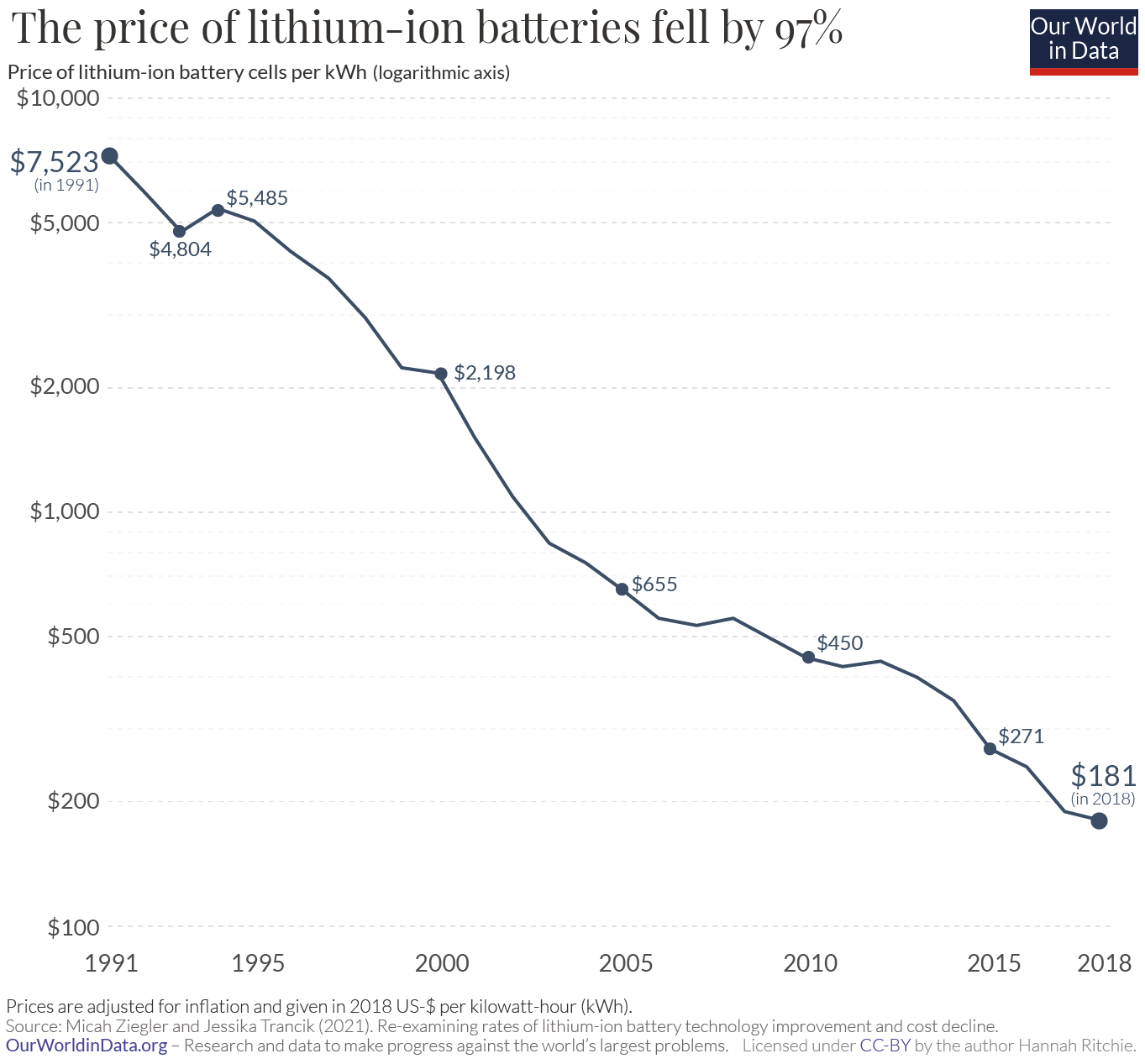
Raw Material Availability: The availability of critical materials like lithium and cobalt remains constrained, with a growing need for innovative recycling solutions to reduce dependency on imports.
4.2. Grid Management and Integration
Overview:
Grid management and integration are essential to ensure that renewable energy sources, like solar and wind, are efficiently distributed to meet demand. The integration of smart grid technologies, AI-driven management systems, and real-time monitoring can help balance supply and demand, particularly given the intermittent nature of renewable energy. AI-driven grid optimization can reduce energy waste and increase grid reliability.
Why This Sub-Sector:
India’s energy grid needs modernization to handle the influx of renewable energy. With nearly 100 GW of solar capacity installed, the variability of renewable energy poses significant challenges to the grid. Advanced grid management solutions will be critical for balancing the load, preventing outages, and ensuring efficient energy distribution.
Startups Making an Impact:
Cygni Energy: Focuses on providing grid-tied solar energy solutions and integrated energy storage for urban and rural areas.
Exponent Energy: Full stack energy company that builds chargers, batteries and everything in between to unlock 15-minute rapid charging for EVs
Challenges:
• Infrastructure Deficiency: India’s aging grid infrastructure struggles to accommodate high levels of renewable energy.
• Intermittency Issues: The variable nature of solar and wind energy creates mismatches in supply and demand, which can disrupt grid stability.
4.3. Green Hydrogen and Alternative Storage Solutions
Overview:
Green hydrogen is a promising alternative for energy storage and decarbonizing sectors such as steel, cement, and heavy transportation. Hydrogen produced via electrolysis, powered by renewable energy, can serve as an efficient storage solution, enabling the integration of renewable energy into both industrial processes and energy grids.
Why This Sub-Sector:
India is aiming to become a global leader in green hydrogen production through the National Hydrogen Mission. Green hydrogen offers a transportable and stable energy source, reducing the country’s dependence on fossil fuels and helping industries move toward decarbonization.
Startups Making an Impact:
Newtrace: Specializes in developing scalable, cost-effective electrolyzers for green hydrogen production, enabling zero-emission energy storage and industrial applications.
Ohmium International: Focuses on manufacturing electrolyzers for green hydrogen production, helping industries reduce their carbon footprints.
Hygenco: Specializes in hydrogen energy technology for clean fuel.
Hygenco: Specializes in hydrogen energy technology for clean fuel
Challenges:
• High Production Costs: Producing green hydrogen via electrolysis remains expensive compared to traditional fossil fuels.
• Infrastructure Requirements: Scaling green hydrogen production requires significant investments in pipelines, refueling stations, and storage facilities.
4.4. Battery Recycling
Overview:
Battery recycling is a critical sub-sector within energy storage, focused on extracting valuable materials like lithium, cobalt, and nickel from used batteries. With the increasing demand for electric vehicles and energy storage systems, recycling helps reduce the environmental impact of battery production and lessens dependency on mining for new raw materials.
Why This Sub-Sector:
As the world moves toward electric mobility and renewable energy, the demand for lithium-ion batteries is skyrocketing. However, the environmental consequences of battery disposal are significant. Recycling solutions that recover valuable raw materials not only mitigate environmental harm but also provide a sustainable supply of resources for new battery production.
Startups Making an Impact:
Lohum: Using its proprietary NEETM™ technology, Lohum recycles lithium-ion batteries, recovering up to 95% of battery raw materials like nickel and cobalt, making it a leader in sustainable battery recycling.
Metastable Materials: Innovating with a chemical-free recycling process to extract rare earth materials such as lithium and cobalt from end-of-life batteries, Metastable Materials is driving forward urban mining efforts and reducing battery manufacturing costs.
Right to Win in Energy Storage and Renewables
India’s energy storage and renewable sector holds a distinct advantage due to several key factors. The nation’s strong push for sustainability, driven by ambitious government targets like achieving 450 GW of renewable energy capacity by 2030, provides a robust foundation for deep tech innovation. India’s abundant renewable resources, particularly in solar and wind, position it as a global leader in renewable energy generation. However, the country’s unique challenges, such as managing intermittency and modernizing grid infrastructure, offer significant opportunities for innovation.
Startups such as Newtrace and Ohmium International are driving breakthroughs in green hydrogen production, addressing the nation’s decarbonization goals and positioning India as a leader in green hydrogen technology. In the battery technology space, companies like Log9 Materials are at the forefront of developing aluminum-air batteries, offering solutions for both electric vehicles and grid storage, contributing to India’s energy independence and carbon reduction efforts.
On the recycling front, Metastable Materials and Lohum are paving the way for sustainable battery recycling solutions, reducing the environmental impact of battery production and extracting valuable raw materials. These companies, combined with India’s robust IT and AI expertise, are innovating scalable solutions for grid management and integration, ensuring that renewable energy is efficiently stored and distributed across the nation.
By capitalizing on homegrown talent and addressing local challenges, India is well-positioned to become a global hub for energy storage and renewables, securing a right to win through cutting-edge technologies and sustainable practices.
5. Quantum Computing: Revolutionizing Problem Solving Across Industries
Introduction:
Quantum computing stands at the forefront of transformative technology, offering the potential to solve complex problems beyond the reach of classical computers. By leveraging quantum mechanics principles such as superposition and entanglement, quantum computers enable parallel computation and solve problems exponentially faster than classical systems. As a foundational pillar of the Fourth Industrial Revolution, quantum computing can revolutionize industries ranging from pharmaceuticals to artificial intelligence, cryptography, finance, and materials science.
The Indian quantum computing market is nascent but has seen tremendous interest from academia, industry, and the government. With the global quantum computing market expected to reach $9.1 billion by 2030 at a CAGR of 36.89%, India is positioning itself as a key player in this transformative space.
Macro Scenario: Global to India
Globally, countries like the US and China are leading the charge in quantum computing, with major corporations such as IBM, Google, and Intel making significant strides in quantum research and development. Governments are pouring billions into quantum initiatives, with the US Quantum Initiative Act and China’s significant investments aiming to dominate this strategic technology.
In India, the government’s National Mission on Quantum Technologies and Applications (NMQTA) earmarked INR 8,000 crore ($1.2 billion) to advance quantum computing, quantum cryptography, and quantum communication systems. Top institutions like IISc Bangalore and IIT Madras are pioneering quantum research, and a new generation of startups is emerging, focused on building quantum solutions for industries ranging from finance to defense.
Sub-Sectors in Quantum Computing:
Quantum computing can be broken down into key sub-sectors based on application and approach. These sub-sectors are:
1. Quantum Hardware
2. Quantum Software and Algorithms
3. Quantum Cryptography and Security
4. Quantum Simulation and Optimization
5.1. Quantum Hardware:
Overview:
Quantum hardware refers to the physical systems designed to run quantum computations. These systems include qubits made from superconductors, trapped ions, photons, or other materials. The challenge in quantum hardware is creating stable qubits that can perform computations with low error rates over long periods. Several approaches are being researched globally, such as superconducting qubits, ion trap systems, and silicon-based qubits.
Startups Making an Impact:
• PsiQuantum (Global): This startup leverages silicon photonics to build scalable quantum computers. Their goal is to build a one-million-qubit machine that could run highly complex simulations.
• SpeQtral (India): Specializing in quantum hardware, SpeQtral develops quantum systems based on trapped ions, offering solutions for both quantum computing and communication.
Challenges in Quantum Hardware:
• Stability and Error Correction: Maintaining qubit coherence and reducing errors is a significant challenge. Achieving quantum error correction for fault-tolerant quantum computers is a key focus.
• Scalability: Scaling quantum systems from tens or hundreds of qubits to thousands or millions remains an open challenge.
5.2. Quantum Software and Algorithms:
Overview:
Quantum software focuses on developing algorithms that leverage quantum computation to solve complex problems more efficiently than classical algorithms. This sub-sector is critical for harnessing quantum hardware to solve real-world problems in industries like pharmaceuticals, materials science, and artificial intelligence.
Startups Making an Impact:
Aliro Technologies (Global): Co-founded by Indian entrepreneur Prineha Narang, Aliro develops quantum software focused on optimizing quantum computing hardware for real-world applications.
Quest Quantum (India): This startup, founded by IISc Bangalore researchers, develops software architecture for quantum applications, with a focus on optimizing quantum algorithms for specific use cases.
Atomionics: Using cold atom interferometry to pinpoint resources with quantum gravimetry
Challenges in Quantum Software:
• Algorithm Development: Quantum algorithms are still in their infancy, and developing algorithms that outperform classical systems for practical use cases is a challenge.
• Hybrid Models: In many cases, hybrid algorithms that combine classical and quantum approaches may be necessary for the near future as full-scale quantum algorithms are still under development.
5.3. Quantum Cryptography and Security:
Overview:
Quantum cryptography is one of the most promising applications of quantum computing, offering the ability to create secure communication channels that are immune to hacking. Quantum key distribution (QKD) enables the secure exchange of encryption keys by exploiting the properties of quantum mechanics. This sub-sector is vital for defense, financial services, and secure communication networks.
Startups Making an Impact:
• QuNu Labs (India): A pioneer in quantum cryptography, QuNu Labs develops quantum-safe encryption solutions to secure communications for defense, government, and enterprise applications. Their Quantum Key Distribution (QKD) systems are already being deployed in sensitive sectors.
• ID Quantique (Global): A global leader in quantum cryptography, ID Quantique offers QKD solutions for financial services and government agencies to ensure secure data transmission.
Challenges in Quantum Cryptography:
• Deployment: While the technology exists, widespread deployment is limited due to cost and infrastructure requirements.
• Regulatory Barriers: Governments are still developing regulations for quantum-secure communication systems, which could delay adoption in certain industries.
5.4. Quantum Simulation and Optimization:
Overview:
Quantum simulation involves using quantum computers to model complex systems that are difficult or impossible to simulate on classical computers. This is particularly useful in areas such as drug discovery, materials science, and finance. Quantum optimization focuses on solving complex optimization problems, such as supply chain optimization or portfolio management, which require exponential computational power.
Startups Making an Impact:
• QC Ware (Global): Specializes in quantum algorithms for simulation and optimization, focusing on financial services, aerospace, and defense.
• Rahko (Global): This quantum software startup focuses on drug discovery using quantum simulations to accelerate the design of new compounds.
Challenges in Quantum Simulation:
• Near-Term Applicability: While quantum simulation holds enormous potential, most real-world applications are still theoretical, and it could be years before they are deployed at scale.
• Error Rates: High error rates in quantum computations limit the accuracy of current quantum simulations.
Right to Win in Quantum Computing
India’s “right to win” in quantum computing is bolstered by a combination of governmental support, academic excellence, and a rapidly growing ecosystem of startups. The National Mission on Quantum Technologies and Applications (NMQTA) provides a strong foundation with its $1.2 billion funding to develop India’s capabilities in quantum computing, quantum cryptography, and quantum communication systems. Top institutions like IISc Bangalore and IIT Madras are at the forefront of research, with a strong emphasis on building the talent pool and infrastructure necessary for quantum technology.
Startups like QuNu Labs, and Atomionics demonstrate India’s potential in quantum cryptography and quantum sensing. GnuQ is pioneering quantum cryptography solutions, focusing on providing secure communication networks crucial for defense, finance, and critical infrastructure. Meanwhile, Atomionics is leveraging cold atom interferometry to build quantum gravimetry systems capable of pinpointing resources like underground water, oil, and mineral deposits. SpeQtral in quantum hardware, and Quest Quantum in quantum software—India is strategically positioned to tackle both the hardware and software challenges of quantum computing..
India’s unique strengths in software development, AI, and data science allow it to create hybrid quantum-classical systems that maximize near-term quantum capabilities.
6. Space & Satellite Technologies: India’s Emerging Leadership in the Final Frontier
Overview:
In 1957, the Soviets launched the first vehicle carrying a satellite into deep space. This historic event ushered in a period marked by the Space Race, a brief yet impactful period of geopolitical rivalry in the conquest of space. It spurred substantial investments from various entities, including governments and private organizations. Today, we find ourselves in the era often referred to as 'NewSpace' or 'Space 3.0,' characterized by the democratization of space access where private enterprises work independently of governments to further push the limits of space technology and exploration.
India is fast becoming a significant player in the global space industry, with a rapidly expanding private space sector that complements the achievements of the Indian Space Research Organisation (ISRO). Recent developments, including ISRO’s privatization initiatives and the establishment of the Indian National Space Promotion and Authorisation Centre (IN-SPACe), have set the stage for India to become a global leader in space technologies. The space sector in India is not just about launching satellites or space exploration but also covers a broad range of applications, including telecommunications, agriculture, disaster management, and more.
Global and India Macro Trends:
Globally, the space industry is witnessing explosive growth, driven by tailwinds such as reusable rockets, satellite miniaturization, and a growing need for global connectivity. In India, the space sector is undergoing significant reforms aimed at boosting private participation, reducing the costs of space operations, and fostering innovation.
India’s private space ecosystem is expanding rapidly, with startups and established companies working across the space tech stack, from launch vehicles to satellite manufacturing and data analytics. With ISRO’s low-cost mission success stories like the Mars Orbiter Mission (Mangalyaan) and Chandrayaan, India has established a strong reputation for cost-effective space missions.
Key trends in India include:
• Privatization of Space: ISRO’s opening up of the space sector to private players and startups through organizations like IN-SPACe.
• Affordable Launches: India’s cost-effective launch capabilities are a major competitive advantage globally, especially for developing countries and emerging space economies.
• Growing Demand for Data: India’s agriculture, insurance, and telecommunications industries are increasingly leveraging satellite data for decision-making.
• Space Tech for Development: Applications such as disaster management, weather forecasting, and rural connectivity are leveraging space technologies to address India’s socio-economic challenges.
Sub-Sectors in Space & Satellite Technologies:
Satellite Data Acquisition & Analysis
Launch Vehicles & Services
Space Support Services
6.1. Satellite Data Acquisition & Analysis
Overview:
Satellite data acquisition and analysis are revolutionizing industries like agriculture, environmental monitoring, maritime surveillance, and defense. With the cost of launching satellites to low-earth orbit (LEO) dropping from $60K+/kg to roughly $5K/kg, alongside advances in miniaturized satellite technology, companies are now building constellations of small satellites to deliver real-time data. These constellations provide frequent refresh rates and high-resolution data, with the potential to monitor everything from soil and crop health to disaster-prone regions.
Why This Sub-Sector:
With global industries increasingly relying on data-driven insights, the demand for satellite-based imagery and analytics has skyrocketed. The ability to gather data in real-time, even in challenging conditions (such as cloud cover or darkness), has expanded the range of use cases for satellite imagery, from monitoring environmental changes to enhancing security and defense. This sub-sector will play a crucial role in data-driven decision-making across various industries.
Startups Making an Impact:
Pixxel: Specializing in hyperspectral imaging, Pixxel is building a constellation of small satellites to offer real-time, high-resolution data for applications ranging from agriculture to climate monitoring and disaster management.
PierSight: Focuses on maritime surveillance using SAR technology. PierSight’s innovative approach to SAR satellite constellations overcomes limitations like cloud cover and darkness, providing critical insights for maritime operations.
SatSure: Delivers actionable insights using satellite imagery and AI-based analytics, primarily focused on sectors like agriculture, infrastructure, and disaster management.
Kawa Space: Offers satellite-based data services, enabling customers to leverage space data for applications such as environmental monitoring and financial risk assessments.
Challenges:
High Data Costs: The cost of acquiring and processing high-resolution satellite data can be prohibitive for smaller businesses.
Data Integration: Integrating satellite data with other datasets for actionable insights remains a challenge for end-users.
6.2. Launch Vehicles & Services
Overview:
Launch vehicles and services represent the infrastructure enabling access to space. India’s private sector is now developing cost-effective, on-demand launch solutions for small satellites. These companies aim to create flexible, scalable, and efficient launch systems to meet the increasing demand for deploying commercial and government satellites.
Why This Sub-Sector:
The growing need for satellite deployment has created a market for affordable and reliable launch services, particularly for small and medium-sized satellites. Launch providers that can offer quick turnaround times and customizable services will play a pivotal role in facilitating the expansion of the space economy. This is especially critical for companies looking to deploy satellite constellations in low-earth orbit.
Startups Making an Impact:
Skyroot Aerospace: Developing affordable, small satellite launch vehicles with a focus on cryogenic and solid propulsion systems. Skyroot’s ambition is to provide on-demand, cost-effective space access.
Agnikul Cosmos: Innovating in the 3D-printing of rocket engines and focusing on small satellite launches with its Agnibaan rocket, providing tailored launch services.
Dhruva Space: Specializes in satellite platforms and ground station solutions, supporting the end-to-end lifecycle of satellite deployment and operations.
Equatorial Space Systems: Focusing on hybrid propulsion technology to reduce the cost and environmental impact of launching small satellites.
Challenges:
Cost of Development: Building reliable and reusable launch vehicles requires high capital investment.
Regulatory Approvals: Securing licenses and regulatory approvals for launches can be time-consuming and complex.
6.3. Space Support Services
Overview:
Space support services encompass a variety of activities essential for the long-term sustainability and expansion of the space economy. This includes satellite refueling, debris monitoring and management, and in-space manufacturing. As the number of satellites in low-earth orbit grows, so does the need for solutions to manage space debris and extend the life of satellites through in-orbit servicing.
Why This Sub-Sector:
With thousands of satellites orbiting the Earth and space becoming more congested, space sustainability has become a top priority. Effective space support services, such as debris tracking and satellite servicing, will be critical for preventing collisions and ensuring the safety of vital communication and observation satellites. These services will also help extend the operational lifespan of satellites, reducing the need for frequent replacements.
Startups Making an Impact:
Digantara: Specializes in space situational awareness and debris tracking, offering real-time monitoring of space debris to prevent satellite collisions.
Astrome: Focuses on satellite communication systems that provide high-bandwidth, millimeter-wave communication to remote and underserved areas.
Cosmoxys: Provides in-orbit servicing solutions, including satellite refueling and repair, aimed at extending the life of satellites and reducing space debris.
Manastu Space: Develops advanced propulsion systems and satellite refueling solutions to increase satellite longevity and reduce orbital congestion.
Challenges:
Infrastructure Development: Building the infrastructure for in-space servicing and debris management requires significant investment.
Orbital Traffic Management: As more satellites are launched, managing the increasing traffic in space presents both technical and regulatory challenges.
Right to Win in Space & Satellite Technologies:
India’s space sector presents a unique competitive advantage on the global stage due to its robust talent pool, government backing, and cost-effective innovation. The ability to produce space technologies at a fraction of the cost seen in other markets has led to India’s strong positioning in both satellite data acquisition and launch services. Moreover, India’s strategic location, advancements in satellite communication, and growing private space companies allow the country to address critical global challenges such as climate monitoring, defense surveillance, and internet connectivity in remote areas.
Key Differentiators and Examples:
Cost-Effective Innovation and Manufacturing:
India’s strength in engineering and low-cost manufacturing provides a clear edge when it comes to building space technologies more affordably. Pixxel, for instance, has taken advantage of this by building hyperspectral imaging satellites in-house, significantly reducing the cost per satellite and allowing for the vertical integration of its space assets. This cost advantage allows Pixxel to compete globally with players like Planet Labs while offering a more affordable solution with higher data resolution.
First-Mover Advantage in SAR for Maritime Surveillance
PierSight is disrupting the Synthetic Aperture Radar (SAR) space with a unique focus on maritime surveillance, combining SAR and Automatic Identification System (AIS) data to offer a tailored solution for ocean monitoring. Unlike other SAR providers, PierSight is addressing key limitations of SAR technology by developing a constellation of application-specific satellites aimed at providing constant, real-time data at reduced costs. By targeting the niche area of maritime surveillance, PierSight is leveraging a first-mover advantage and is well-positioned to become a global leader in this space.
Scalable and Flexible Launch Solutions
Skyroot Aerospace and Agnikul Cosmos are reimagining launch services with scalable, customizable launch solutions for small satellites. Skyroot’s Vikram series of rockets is designed to offer on-demand, affordable space access with flexible payload capabilities. Agnikul’s Agnibaan rocket further differentiates itself with 3D-printed rocket engines, allowing for rapid customization and production, reducing lead times for satellite launches. These startups are providing tailored solutions to meet the growing demand for launching small satellite constellations in low-earth orbit (LEO).
Space Debris Management and Sustainability
As space becomes increasingly crowded, sustainability and space debris management are becoming paramount. Digantara is taking a proactive approach by providing real-time tracking of space debris and monitoring the space environment, offering solutions to avoid collisions and manage orbital traffic. This emphasis on sustainability gives Indian companies like Digantara a crucial role in the global space ecosystem as the industry grapples with the growing problem of space congestion.
Strategic Government Support
India’s government support through ISRO and its National Space Policy provides a solid foundation for the country’s right to win. ISRO’s deep expertise, coupled with the increasing privatization of the space sector, allows Indian startups to collaborate on a global scale. The National Space Transportation Policy, which supports private players in satellite launch services and data acquisition, enhances India’s capability to win in global markets.
Data-Driven Insights for Agriculture and Climate Monitoring
SatSure and Kawa Space are leveraging the power of satellite data to address critical issues such as agricultural productivity, disaster management, and climate monitoring. SatSure’s combination of satellite imagery with big data and AI analytics delivers actionable insights for improving crop yields, making it a critical player in global efforts to tackle food security. Meanwhile, Kawa Space is optimizing satellite data to provide insights for sectors ranging from finance to infrastructure monitoring, setting it apart with its highly customizable solutions for industries that rely on satellite-based intelligence.
Conclusion:
India’s space sector is uniquely positioned to compete globally due to its ability to deliver cost-effective, scalable, and innovative space technologies. With companies like Pixxel, PierSight, Skyroot, and Digantara pushing the boundaries of what’s possible, India is not only solving domestic challenges but also addressing global needs in climate monitoring, defense, and communication. By leveraging its strengths in manufacturing, government support, and a rapidly growing space ecosystem, India has secured its right to win in the global space race.
7. Semiconductor Design: Powering the Future of Electronics and Deep Tech
Overview:
Semiconductor design is the cornerstone of modern electronics, enabling everything from smartphones to artificial intelligence (AI) and quantum computing. As the world enters the era of 5G, artificial intelligence, Internet of Things (IoT), and autonomous systems, the demand for advanced semiconductor chips has reached unprecedented levels. India, while historically known for its IT services, is emerging as a hub for semiconductor design, with a growing ecosystem of startups, design houses, and academic institutions contributing to global innovation.
India’s semiconductor design ecosystem is primarily driven by its highly skilled engineering workforce, cost advantages, and a burgeoning domestic market for electronics. In recent years, global players like Intel, Qualcomm, and NVIDIA have increased their investments in India’s semiconductor design sector, while a new wave of Indian startups is addressing key challenges like low-power designs, AI accelerators, and domain-specific architectures.
Global and India Macro Trends:
Globally, the semiconductor industry is valued at over $500 billion, and it is expected to grow to $1 trillion by 2030. This growth is fueled by the increasing demand for more powerful and energy-efficient chips across industries such as telecommunications, automotive, healthcare, and consumer electronics.
India is poised to become a major player in semiconductor design due to several macro trends:
India’s Digital Push: The government’s ambitious initiatives like “Digital India” and “Make in India” are creating a fertile ground for semiconductor innovation.
5G Rollout and IoT Expansion: With the impending rollout of 5G, the demand for chips designed for telecommunications and IoT devices is expected to surge.
Government Support: The Indian government has announced various policies and incentives to attract semiconductor companies and boost local design capabilities.
Global Semiconductor Shortages: Supply chain disruptions and geopolitical tensions have highlighted the need for diversified semiconductor production and design centers, putting India in a favorable position.
Sub-Sectors in Semiconductor Design:
Custom ASICs and System-on-Chip (SoC) Design
AI and Edge Computing Chips
Semiconductor Manufacturing and Fabrication Services
7.1 Custom ASICs and System-on-Chip (SoC) Design
Overview:
Custom ASICs (Application-Specific Integrated Circuits) and System-on-Chip (SoC) designs are highly specialized chips tailored for specific applications. These chips optimize performance, reduce power consumption, and increase scalability for various devices, from smartphones and electric vehicles to industrial IoT systems and cloud servers. SoCs integrate multiple components—such as the CPU, GPU, memory, and communication interfaces—onto a single chip, making them ideal for space and power-constrained environments.
Startups Making an Impact:
Mindgrove Technologies: Specializes in developing custom AI and machine learning ASICs for autonomous systems and robotics, offering energy-efficient chips that enable real-time data processing.
InCore Semiconductors: Focuses on developing RISC-V-based SoCs, providing open-source and customizable chip designs for applications ranging from consumer electronics to industrial automation
Challenges:
Design Complexity: Custom ASIC and SoC development involves significant R&D, and the design cycle can be lengthy and costly.
Time-to-Market: Fast-paced industries like AI and IoT often demand rapid product iterations, which can challenge the long lead times required for custom chip designs.
7.2 AI and Edge Computing Chips
Overview:
AI and edge computing chips are specialized processors designed to handle the high computational demands of AI algorithms and edge applications. These chips are optimized for tasks such as machine learning, computer vision, and real-time analytics, reducing latency by processing data locally on devices rather than relying on cloud infrastructure. This is critical for applications like autonomous vehicles, industrial automation, healthcare devices, and smart cities, where real-time decision-making is essential.
Why This Sub-Sector:
The growing demand for AI-enabled applications is driving the need for chips that can process vast amounts of data at the edge, without relying on cloud infrastructure. AI chips are designed to handle high data throughput with low latency, making them indispensable in industries ranging from robotics to autonomous driving.
Startups Making an Impact:
Morphing Machines: Focuses on developing reconfigurable chips that can adjust their architecture based on the computational needs of AI workloads, providing flexibility for a range of applications.
Sankhya Labs: Specializes in designing AI accelerators that enable real-time machine learning in industries like automotive, healthcare, and industrial automation.
Challenges:
Energy Consumption: AI chips require significant computational power, and optimizing them for energy efficiency is a major challenge, particularly for edge devices.
Processing Capabilities: As AI models become increasingly complex, chips must evolve to handle the growing computational demands, necessitating continuous innovation.
Competition from Global Giants: Companies like NVIDIA and Google dominate the AI accelerator space, making it difficult for startups to compete at a global level.
7.3 Semiconductor Manufacturing and Fabrication Services
Overview:
The semiconductor manufacturing and fabrication services sub-sector encompasses companies involved in producing and packaging chips. While India has historically been strong in semiconductor design, manufacturing has lagged behind. However, with increasing investments and the launch of initiatives like the Semicon India Program, India is making strides toward building its own semiconductor fabrication capabilities. Semiconductor manufacturing involves complex processes such as photolithography, doping, and etching, used to create integrated circuits on silicon wafers.
Why This Sub-Sector:
As geopolitical tensions and supply chain disruptions have highlighted the strategic importance of semiconductor manufacturing, many countries, including India, are focusing on building domestic fabrication capabilities. India’s efforts to reduce its reliance on foreign-made chips are critical for ensuring its long-term competitiveness in the global electronics and semiconductor markets.
Startups and Companies Making an Impact:
Sahasra Semiconductor: Based in Rajasthan, Sahasra Semiconductor became the first company to commercially produce memory chips in India, marking a significant milestone in the country’s push for semiconductor self-reliance.
Simmtech: A key player in the Indian semiconductor supply chain, Simmtech specializes in printed circuit board (PCB) manufacturing, a critical component in chip fabrication.
Air Liquide: Provides high-purity industrial gases necessary for the semiconductor manufacturing process, including gases used in photolithography, etching, and chemical vapor deposition (CVD).
Challenges:
High Capital Expenditure: Establishing and maintaining semiconductor fabs requires billions of dollars in investment, making it a significant barrier to entry for most companies.
Supply Chain Dependencies: Semiconductor manufacturing relies on a global supply chain for raw materials, machinery, and equipment, which can be vulnerable to disruptions.
Right to Win in Semiconductor Design and Manufacturing
India’s burgeoning semiconductor ecosystem, supported by government initiatives such as the Semicon India Program and the PLI Scheme, has created a unique environment for companies to thrive. The combination of a vast talent pool, a growing demand for semiconductors across industries, and increasing investments in R&D gives India a competitive edge. India’s right to win lies in its ability to leverage its strengths in design, scalability, and cost-effective manufacturing, while strategically positioning itself within the global semiconductor supply chain.
Unique Talent Pool and Cost Efficiency: India has a robust workforce of over 20% of the global semiconductor design engineers, a key asset that enables companies like InCore Semiconductors and Mindgrove Technologies to create highly customized ASICs and SoCs for advanced applications, such as AI and edge computing. These startups can offer cutting-edge solutions while keeping development costs lower than their Western counterparts, providing a distinct cost advantage.
Government Support and Infrastructure: The Indian government’s initiatives, such as the PLI Scheme and Semicon India Program, provide critical financial support and infrastructure development to bolster semiconductor manufacturing. Sahasra Semiconductor, for example, is one of the first companies in India to start local memory chip production, positioning itself as a key player in reducing India’s dependence on imported chips.
Strategic Focus on Supply Chain Integration: India’s right to win also stems from building a strong domestic supply chain. Companies like Simmtech and Air Liquide are crucial in supporting the ecosystem with printed circuit boards (PCBs) and high-purity gases, respectively, ensuring that Indian chip manufacturing can be competitive at a global scale. Their involvement demonstrates the country’s ability to integrate vital components of the semiconductor production process locally.
8. Defense Tech: Securing the Future with Cutting-Edge Innovation
Introduction:
Defense technology plays an essential role in national security and global peacekeeping. With technological advancements accelerating at an unprecedented pace, the defense sector has increasingly embraced innovations in AI/ML, cybersecurity, autonomous systems, computer vision, and command and control communications. These innovations are transforming traditional defense strategies, making national defense more intelligent, agile, and capable of responding to modern threats.
India is currently undergoing a major transformation in its defense capabilities, with a focus on modernization, self-reliance, and expansion. The government is making significant efforts to promote domestic production, streamline procurement, and enhance technological capabilities across defense domains. With the Atmanirbhar Bharat (Self-Reliant India) initiative and large-scale government investments, the Indian defense tech sector is poised for rapid growth, with local startups emerging as key players in this revolution.
Macro Scenario: Global to India Overview
Globally, the defense tech industry is expected to reach a value of over $1 trillion by 2030, with a compound annual growth rate (CAGR) of approximately 5.8%. Countries like the United States, Russia, China, and European nations are leading the race by heavily investing in autonomous systems, cybersecurity, and next-gen weaponry. Additionally, geopolitical instability has resulted in nations investing heavily in cutting-edge technology to stay ahead in defense capabilities.
India, with a growing economy and complex geopolitical landscape, is heavily investing in defense modernization. The Indian government has significantly increased defense spending to $70 billion for FY 2024, focusing on indigenous defense tech innovations, procurement, and exports. India’s defense exports are projected to cross $5 billion by 2025. The government has also imposed import bans on several items to promote local manufacturing, further fueling the growth of defense tech startups.
Sub-Sectors in Aerospace & Defense:
Unmanned Aerial Systems (UAS) and Autonomous Platforms
Cybersecurity and Communication Systems
Advanced Surveillance and Imaging
Electronic Warfare and Combat Systems
8.1. Unmanned Aerial Systems (UAS) and Autonomous Platforms
Overview:
Autonomous platforms such as Unmanned Aerial Systems (UAS), unmanned ground vehicles (UGVs), and unmanned marine systems are revolutionizing the defense sector by allowing for better situational awareness, real-time intelligence, and autonomous decision-making. These systems play a critical role in intelligence gathering, reconnaissance, surveillance, and combat missions without putting human soldiers in harm’s way.
Why This Sub-Sector:
Autonomous platforms are critical for modern defense operations, providing enhanced capabilities in high-risk zones and operational theaters. They can navigate complex terrains autonomously, offering real-time insights into enemy activities, safeguarding borders, and enabling precision strikes.
Startups Making an Impact:
General Aeronautics: Builds cutting-edge drone solutions for military surveillance, border security, and reconnaissance. Their advanced drone systems are equipped with AI for real-time data analysis and intelligence gathering.
AjnaLens: Focuses on AR/VR and autonomous platforms, providing military training simulations and remote combat decision-making tools through drones.
EyeROV: Specializes in underwater drones (ROVs) for naval defense, offering deep-sea surveillance, asset inspections, and defense missions under water.
Challenges:
Regulatory Compliance: Strict regulatory frameworks on the use of drones and autonomous systems can hinder large-scale deployment.
Integration and Security: Ensuring that autonomous systems can seamlessly integrate with existing defense infrastructure while being protected from cyber threats is a challenge.
*TRL: technology readiness level
8.2. Cybersecurity and Communication Systems
Overview:
With defense strategies becoming more digital, cybersecurity and secure communication are vital components of modern defense operations. The rise of cyber warfare has exposed the vulnerability of traditional defense systems to cyber-attacks, hacking, and data breaches. Secure communication systems that leverage encryption, quantum-safe cryptography, and satellite communications are essential for real-time command, control, and intelligence sharing among military forces.
Why This Sub-Sector:
Securing military assets, networks, and communications is crucial to ensuring operational integrity. As defense operations become increasingly data-driven, cybersecurity measures must be enhanced to protect against advanced persistent threats (APTs) and nation-state-sponsored cyber-attacks.
Startups Making an Impact:
QuNu Labs: A pioneer in quantum-safe encryption, providing secure communication solutions for defense operations and protecting critical national infrastructure from cyber threats.
Optimized Electrotech: Specializes in secure communication systems, offering high-performance electronics and electro-optic defense solutions that ensure secure data transmission in critical environments.
NewSpace Technologies: Provides satellite-based communication solutions that enable real-time, secure communication for military operations across land, sea, air, and space.
Challenges:
Evolving Threat Landscape: The rapid evolution of cyber threats makes it difficult to maintain cutting-edge defenses.
Cost of Infrastructure: Deploying secure communications and cybersecurity infrastructure is capital-intensive, particularly for emerging defense tech startups.
8.3. Advanced Surveillance and Imaging
Overview:
Surveillance and imaging technologies are critical for defense operations, offering high-resolution imagery, real-time data analytics, and advanced monitoring capabilities. These systems include satellite-based imaging, night vision, infrared sensors, and radar technologies that enable defense forces to gather actionable intelligence. Surveillance technologies are crucial for border monitoring, maritime security, and counterterrorism efforts.
Why This Sub-Sector:
Surveillance and imaging are key components in gathering real-time intelligence, monitoring enemy activities, and safeguarding national borders. As India faces complex challenges along its borders, these technologies are critical for maintaining national security.
Startups Making an Impact:
Tonbo Imaging: Develops electro-optic imaging systems that provide real-time battlefield intelligence, enhancing situational awareness for defense forces. Their systems offer night vision and thermal imaging capabilities.
Planys Technologies: Provides underwater surveillance and imaging solutions, offering remotely operated vehicle (ROV) systems for underwater inspections and monitoring of naval assets.
PierSight: Focuses on maritime surveillance using SAR (Synthetic Aperture Radar) and AIS technologies to provide real-time tracking of maritime activities. They uniquely address the limitations of optical satellites with all-weather, all-time SAR imaging.
Challenges:
Data Processing: Processing and analyzing vast amounts of data generated by surveillance systems in real-time is complex.
Weather and Environmental Conditions: Optical and infrared imaging systems can be hindered by weather conditions and terrain, though SAR technologies are helping to address this limitation.
4. Electronic Warfare and Combat Systems
Overview:
Electronic warfare (EW) involves the use of the electromagnetic spectrum to disrupt, deceive, or neutralize enemy communications, radar, and other electronic systems. Modern combat systems rely on electronic warfare technologies to gain a strategic advantage in battlefield operations, ensuring superiority in the electromagnetic domain. This sub-sector also includes smart munitions, missile defense systems, and counter-drone technologies.
Why This Sub-Sector:
Electronic warfare is critical in modern military engagements, allowing forces to disrupt enemy operations without direct confrontation. By jamming communications and neutralizing enemy radar, electronic warfare systems provide a tactical advantage, enhancing mission success.
Startups Making an Impact:
Big Bang Boom Solutions: Specializes in smart munitions and electronic warfare systems, providing combat-ready solutions that leverage AI and autonomous systems for targeting and decision-making.
Tonbo Imaging: In addition to their imaging systems, they also provide advanced electronic warfare solutions to neutralize enemy assets.
SASMOS: A leading provider of aerospace and defense electronics, developing systems that enable electronic warfare and secure communication for combat operations.
Challenges:
Technological Arms Race: Electronic warfare is an ongoing technological battle, with constant advancements in countermeasures by adversaries.
Integration: Integrating electronic warfare systems into legacy defense infrastructure requires significant investment and technical expertise.
Right to Win in Defense Tech
India’s defense tech sector is uniquely positioned to thrive due to a combination of strong government support, a skilled workforce, and an emerging ecosystem of innovative startups. Initiatives like Atmanirbhar Bharat and the push for self-reliance are fostering an environment where homegrown companies can develop cutting-edge technologies for domestic and international markets. Startups like Tonbo Imaging and Optimized Electrotech are leveraging India’s talent in AI, computer vision, and secure communications to provide critical solutions for defense modernization. Moreover, companies such as PierSight are offering differentiated solutions with technologies like SAR-based maritime surveillance, addressing niche but critical defense needs.
India’s comprehensive defense strategy, combined with a focus on multi-product capabilities, positions these startups to build long-term, scalable relationships with government and private sector defense players. Additionally, with Indian companies now exploring international defense markets, there is a significant opportunity to drive exports and position India as a global leader in defense technology innovation.
Conclusion:
The Indian defense tech sector is poised for rapid expansion as the government pushes for self-reliance and indigenous innovation. Companies like AjnaLens, PierSight, Tonbo Imaging, and Big Bang Boom Solutions are at the forefront of this revolution, providing cutting-edge technologies that are transforming defense operations in India and globally. As India seeks to modernize its defense infrastructure, there is immense potential for local startups to secure government contracts and international collaborations.
To remain competitive, defense tech companies must continue to innovate, diversify their product offerings, and tap into global markets. With strong government backing, a talented workforce, and a growing startup ecosystem, India is well-positioned to emerge as a global leader in defense technology. However, overcoming challenges related to cybersecurity, regulation, and integration will be crucial to realizing the full potential of these technologies.
9. *Artificial Intelligence (AI) and Machine Learning (AI/ML):
Introduction
Artificial Intelligence (AI) and Machine Learning (ML) have traditionally been seen as distinct fields from Deep Tech due to their broad applications and vast commercial potential. However, recent advances, such as the development of transformative AI technologies (e.g., generative AI, large language models like GPT-4, LLaMA, etc.), have made significant leaps from theoretical concepts to practical implementations across sectors. This rapid evolution has warranted their inclusion in Deep Tech, not solely due to their commercial applications but because of their deep technological foundations that are driving innovation across industries.
AI is now a cornerstone for automating complex processes, enabling predictive analytics, and creating personalized experiences across multiple sectors. Moreover, India’s strategic positioning in AI research and startups is reshaping the global landscape, bolstered by government initiatives, grants, and a robust talent pool.
Macro Trends and Tailwinds
Global AI Adoption Surge: AI is no longer confined to labs. Major advancements in Generative AI and Transformer models have shifted from research phases to real-world applications (e.g., OpenAI’s GPT-4, Meta’s LLaMA, Google’s Gemini, etc.).
Computational Power: The availability of powerful GPUs, TPUs, and cloud computing platforms has democratized access to AI and enabled the training of more complex models.
Policy Push in India: Initiatives like the India AI Mission (INR 10,371.92 crore), digital India, and AI for All have enabled AI startups to receive critical support from the government, particularly in sectors like agriculture, healthcare, and fintech .
Increasing Data Availability: With the exponential growth of data from IoT devices, sensors, and digital platforms, AI technologies have access to vast amounts of information, which feeds into developing more efficient and accurate AI/ML models.
AI Democratization: Open-source tools (e.g., Langchain, Hugging Face) and platforms (e.g., PyTorch, TensorFlow) have made AI development accessible to a global community, significantly reducing barriers for startups and enterprises alike.
India’s Strength in Deep Science Tech: As noted in the reports, India’s AI landscape is supported by key enablers like grants, a highly competitive talent pool, and growing investment in AI research, driving the nation’s global competitiveness
Sub-Sector
Overview
Startups Making an Impact (India)
Global Players
Challenges
Compute and Foundational Models
Compute infrastructure and foundational models form the base of AI innovation, offering pre-trained models that can be fine-tuned for specific applications and deployed at scale.
- GigaML: Fine-tunes and optimizes large foundation models for enterprise-specific needs.
- Sarvam.ai: Provides scalable infrastructure for AI deployment.
- Krutrim: Builds generative AI models for various verticals.
- OpenAI (GPT-4)
- Google (Gemini)
- Meta (LLaMA)
- Cold Start Issues: Requires vast data and compute resources to develop foundational models from scratch.
- Scalability: Balancing efficiency and performance in scaling infrastructure.
Data Transformation and Pipelines
This layer involves ETL (extract, transform, load), data pipelines, and infrastructure to prepare data for AI models and connect LLMs with enterprise data for real-time decision-making.
- Branch: Builds robust data pipelines for AI deployments at scale.
- Marqo: Provides an AI-powered semantic search platform.
- EmbedChain: Connects LLMs to enterprise systems for real-time insights.
- Databricks
- Snowflake
- Apache Kafka
- Data Integration: Managing vast, disparate datasets for accurate results.
- Real-Time Processing: Ensuring real-time processing while maintaining accuracy and efficiency.
Tooling Layer
Provides orchestration, observability, and management tools for deploying AI applications at scale, ensuring compliance with security and privacy regulations.
- DynamoFL: Embeds security, privacy, and auditability into AI models for highly regulated industries.
- Portkey: Manages prompt orchestration and model performance.
- Ragas: Specializes in AI model observability and evaluation.
- Weights & Biases
- DataRobot
- Sagemaker (AWS)
- Security and Compliance: Ensuring compliance with strict security and privacy regulations in industries like healthcare and finance.
- Model Observability: Monitoring real-time AI model performance.
Right to Win:
India’s burgeoning AI ecosystem, supported by a strong talent pool, government backing, and a growing number of startups, positions the country as a key player in AI infrastructure. Companies like GigaML and Krutrim are leveraging India’s strengths in software development and data science to build advanced AI models. The presence of homegrown startups such as Marqo and Branch reflects India’s growing importance in the global AI landscape.
Moreover, India’s diverse market—with multiple languages, regional variations, and vast amounts of data—creates a unique opportunity for startups to build AI models that can cater to these specific challenges. The cost-effectiveness of Indian AI solutions, coupled with deep research and innovation, positions Indian AI infrastructure companies to succeed not only domestically but also on the global stage.
Conclusion: Deep Tech — Shaping the Future of Industries and Societies
The promise of Deep Tech is nothing short of transformative. From robotics to quantum computing, from AI to synthetic biology, these advanced technologies are redefining industries, solving complex societal problems, and pushing the boundaries of human capability. The impact of Deep Tech is not limited to any one sector — it has the power to change the very fabric of society, driving economic growth, addressing climate change, enhancing healthcare, and improving quality of life.
In the context of India, the importance of Deep Tech cannot be overstated. As the country grapples with challenges like climate change, food security, healthcare accessibility, and energy demands, it is clear that traditional technologies alone cannot offer the solutions we need. India's alignment with global Deep Tech trends — in areas such as renewable energy, healthcare innovation, advanced manufacturing, space exploration, and quantum computing — marks a critical shift in its technological landscape. The nation's robust ecosystem of startups, research institutions, and government initiatives is creating an environment ripe for innovation and investment.
The surge in Deep Tech funding, driven by both private investors and government initiatives, is catalyzing the growth of transformative technologies across key sectors. The financial commitment from the Indian government to support areas like semiconductors, AI, quantum technologies, and space exploration is a clear signal of India's intent to become a global leader in Deep Tech. This support, combined with the growing confidence of investors, is positioning India at the forefront of the next technological revolution.
As we move forward, the distinction between vertical and horizontal Deep Tech models highlights the diversity of approaches in innovation. While vertical models focus on solving niche, industry-specific challenges with high barriers to entry, horizontal models aim for broader applications across multiple sectors. Both models hold tremendous potential for growth and impact, and both will be crucial as Deep Tech continues to evolve and scale.
In sectors such as robotics, advanced materials science, synthetic biology, energy storage, and quantum computing, Indian startups are already making significant strides. By developing solutions that address India's unique challenges and aligning with global technological trends, these companies are positioned to lead the charge in creating a more sustainable, efficient, and technologically advanced world.
Ultimately, the future of Deep Tech lies in its ability to solve the most pressing challenges facing humanity. From tackling climate change to enabling quantum breakthroughs, Deep Tech offers the tools we need to build a future that is not only more advanced but also more equitable and sustainable. The integration of Deep Tech into every facet of industry and society will drive the next wave of innovation, fundamentally altering the way we live, work, and interact with the world.
India, with its combination of a rapidly growing economy, a vast talent pool, and strong government support, is uniquely positioned to become a global leader in Deep Tech innovation. By continuing to invest in cutting-edge research, fostering a supportive ecosystem for startups, and leveraging its natural advantages, India will play a crucial role in shaping the future of Deep Tech and ensuring that its benefits are felt worldwide.